Valencia in September 2026: Best Things to Do, Beaches & Local Events
September is the month locals get Valencia back. The August crowds thin out, the sea is still warm, and the city stops running on tourist-season autopilot. September is the best month to visit. Here’s exactly what to do with it.
Why September Works
August in Valencia is hot, crowded, and half-empty of locals — everyone who can leaves for the coast further south or heads to their pueblo. September flips that. Temperatures ease from August’s peak heat to a much more walkable high 20s (low-to-mid 80s°F), the Mediterranean is still around 24°C (75°F) — arguably the best swimming temperature of the year, since the sea has had all summer to warm up — and the city itself wakes back up. Restaurants that closed in August reopen. Locals reclaim the beaches on weekends. It’s the sweet spot between summer heat and autumn quiet.
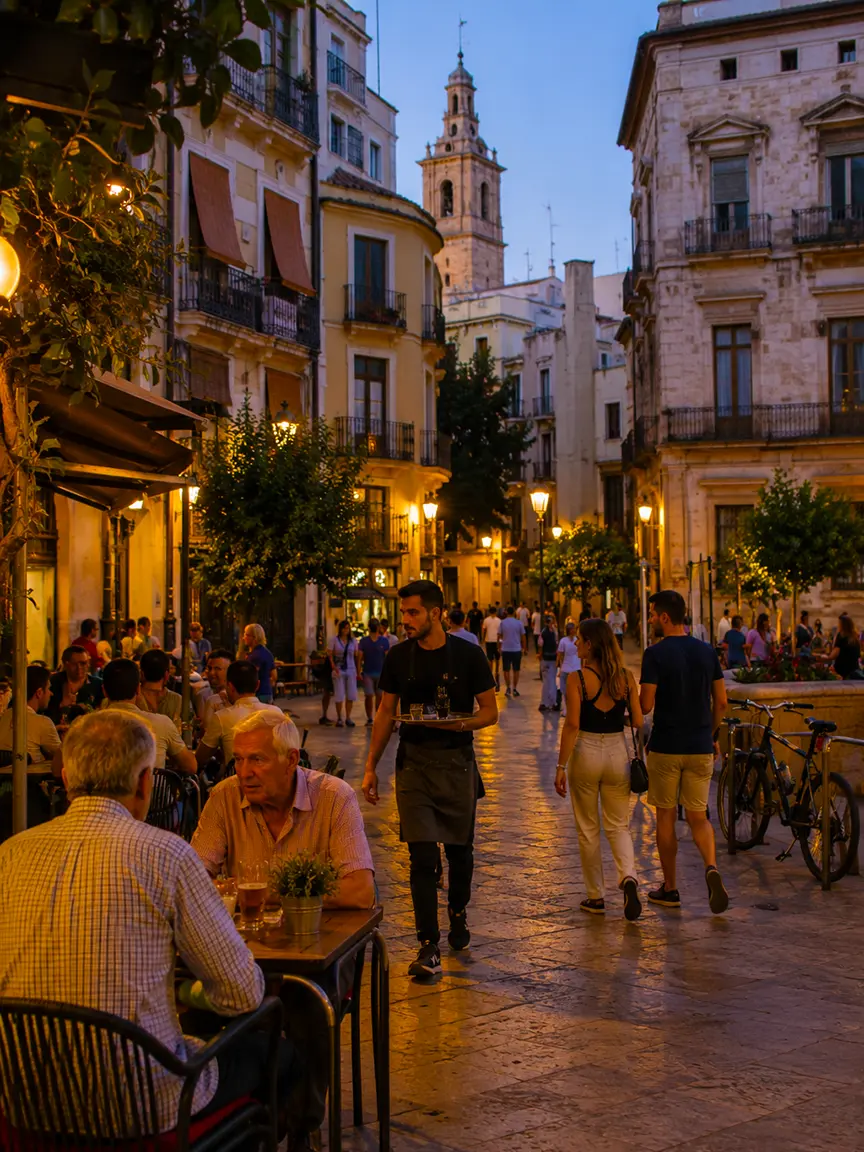
There’s a quieter reason too: September is when Valencia stops performing for visitors and goes back to being itself. Terraces fill with locals again alongside visitors. Shopkeepers who took the month off in August are back behind the counter. None of this shows up in a weather forecast, but it’s the difference between watching a city and actually being in one.
Things to Do in Valencia in September
On Two Wheels
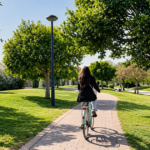
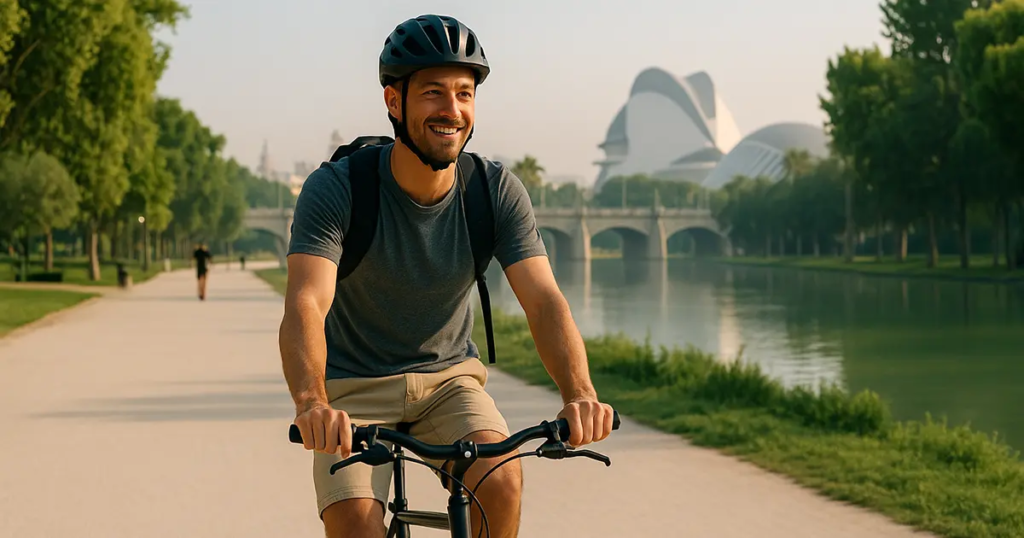
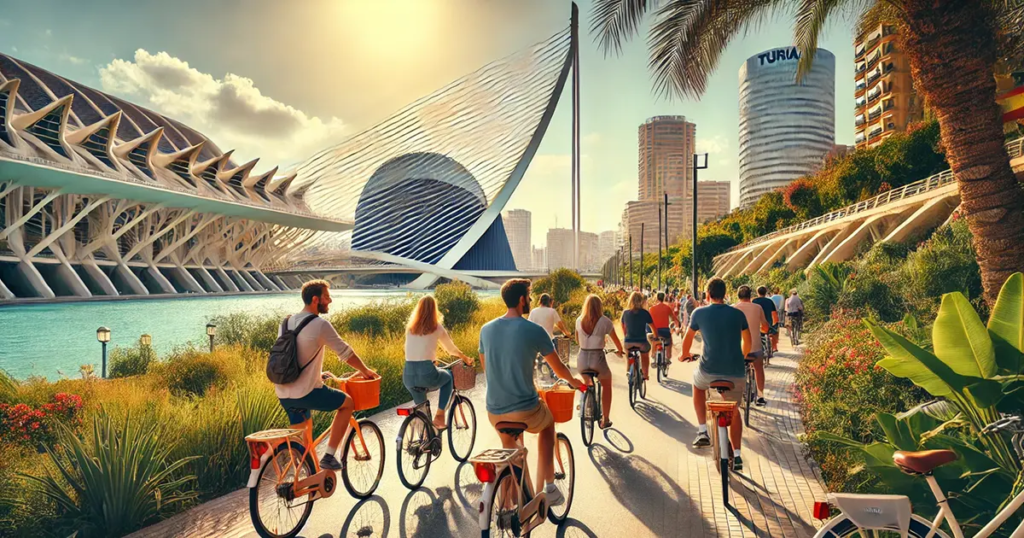
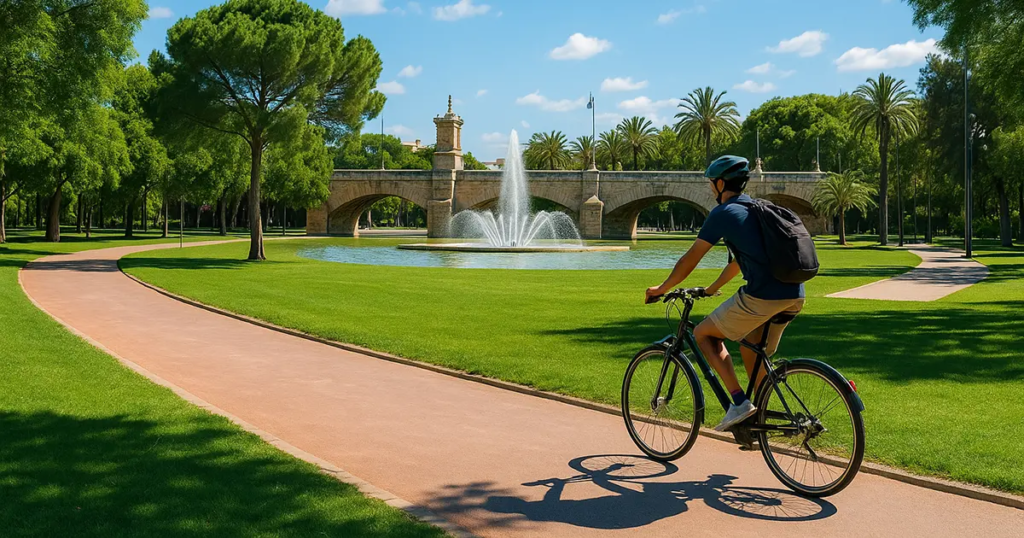
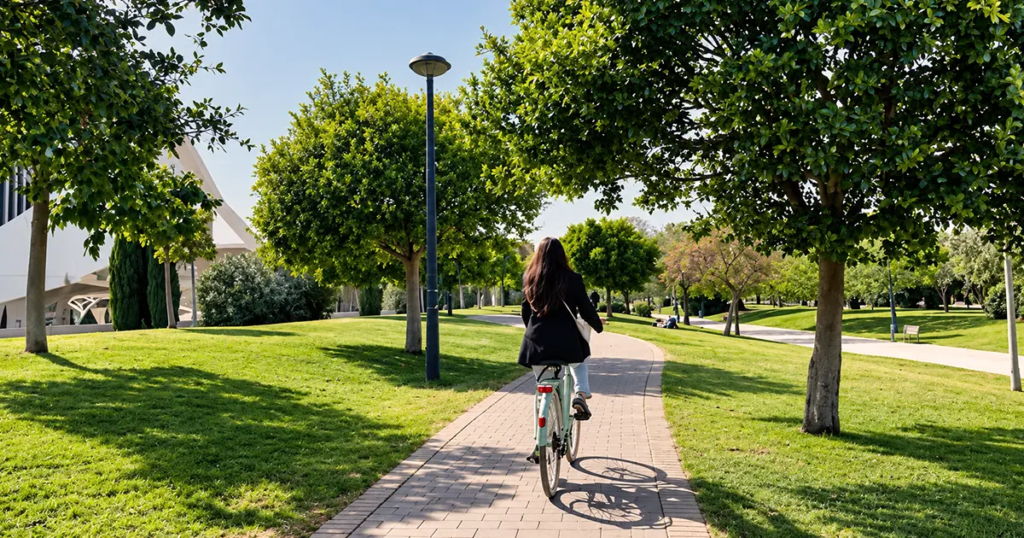
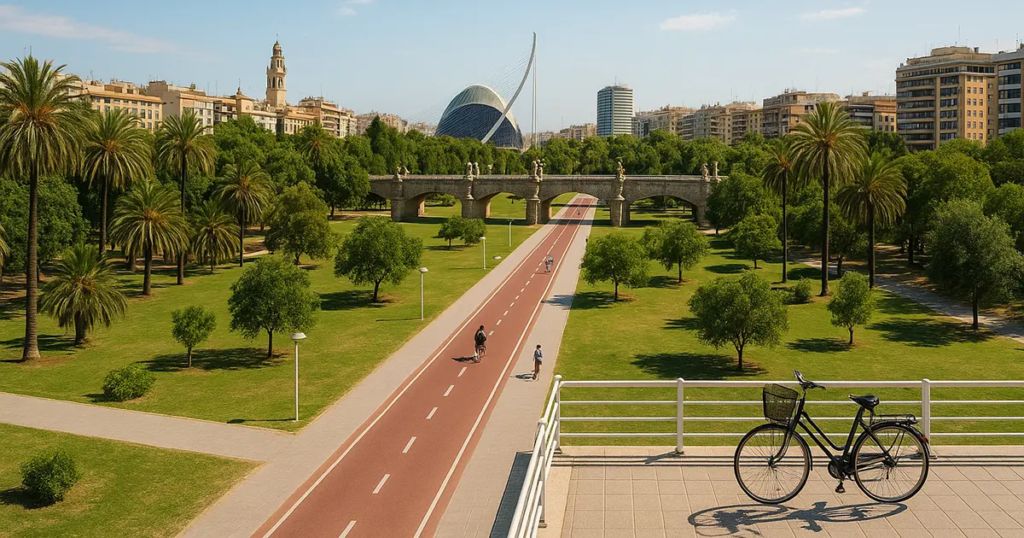
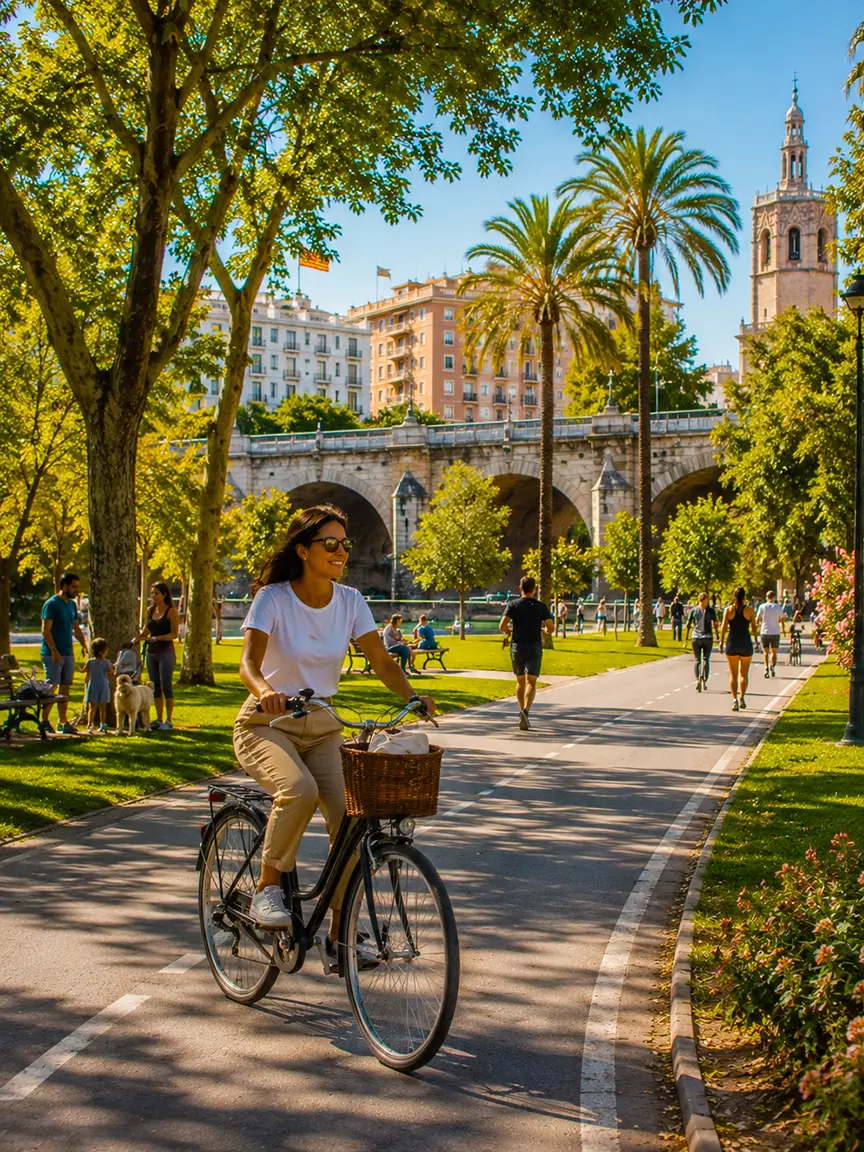
Valencia was built for this. Turia Garden — the dried-up riverbed turned into a 9-kilometer green corridor looping through the entire city — is the single best way to get your bearings without touching a single road. Start near the City of Arts and Sciences and ride toward the old riverbed’s western end; you’ll pass football stadiums, skate parks, orange groves, and quiet neighborhoods most itineraries skip entirely.
The garden itself is split into distinct zones, and it’s worth knowing this before you ride in blind: the southern stretch near the City of Arts feels almost tropical, all palm trees and modern architecture; further north it turns into sports fields and open lawns where families picnic on weekends; and the far western end, past the Bioparc, thins out into something closer to countryside. You can cycle the full garden in well under an hour without stopping, but that rather misses the point.
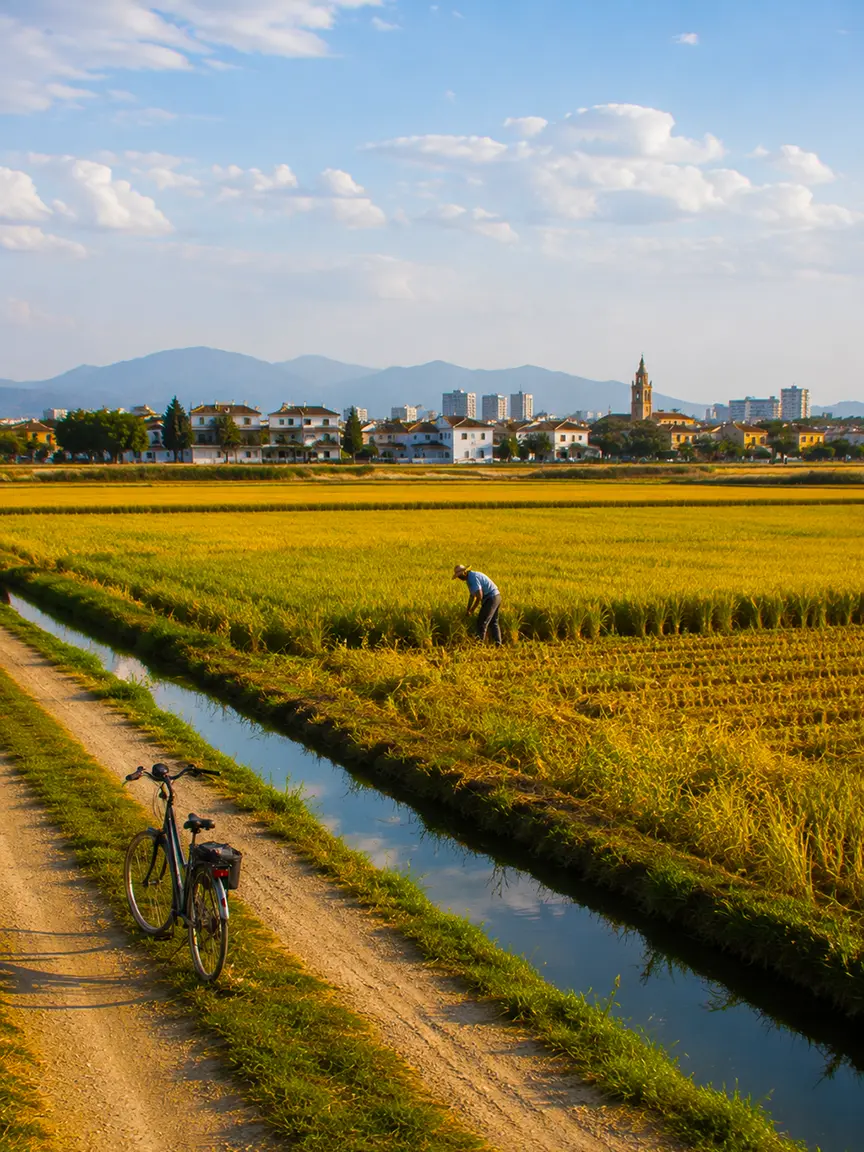
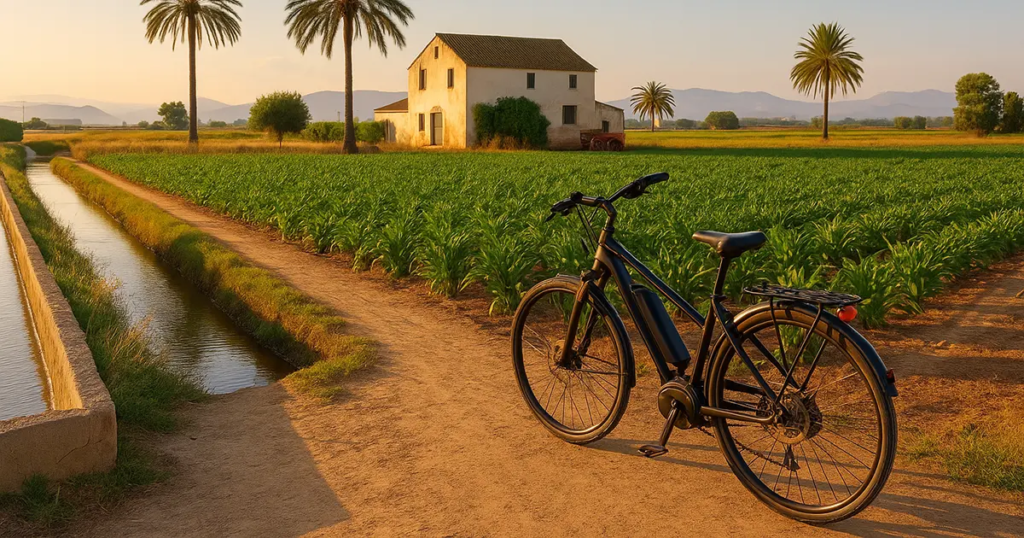
From Turia, most people either keep riding independently on a rental, or push on toward Albufera Natural Park — the wetland twenty minutes south of the center that most first-time visitors don’t know exists. It’s a freshwater lagoon ringed by rice paddies where Valencia’s paella actually comes from, not as a metaphor: the rice is grown right there. September is the harvest month, and the fields turn from green to gold as the crop ripens.
Two ways to see it, depending on what the day is for. The Valencia Albufera E-Bike Tour rides out through the rice fields; the Albufera boat & paella tour adds a boat crossing and a sit-down lunch for anyone who’d rather slow down and eat well than rack up kilometers. A rental works just as well for the independent version — the cycle path south from the city is flat and easy to follow.
Beyond the Center
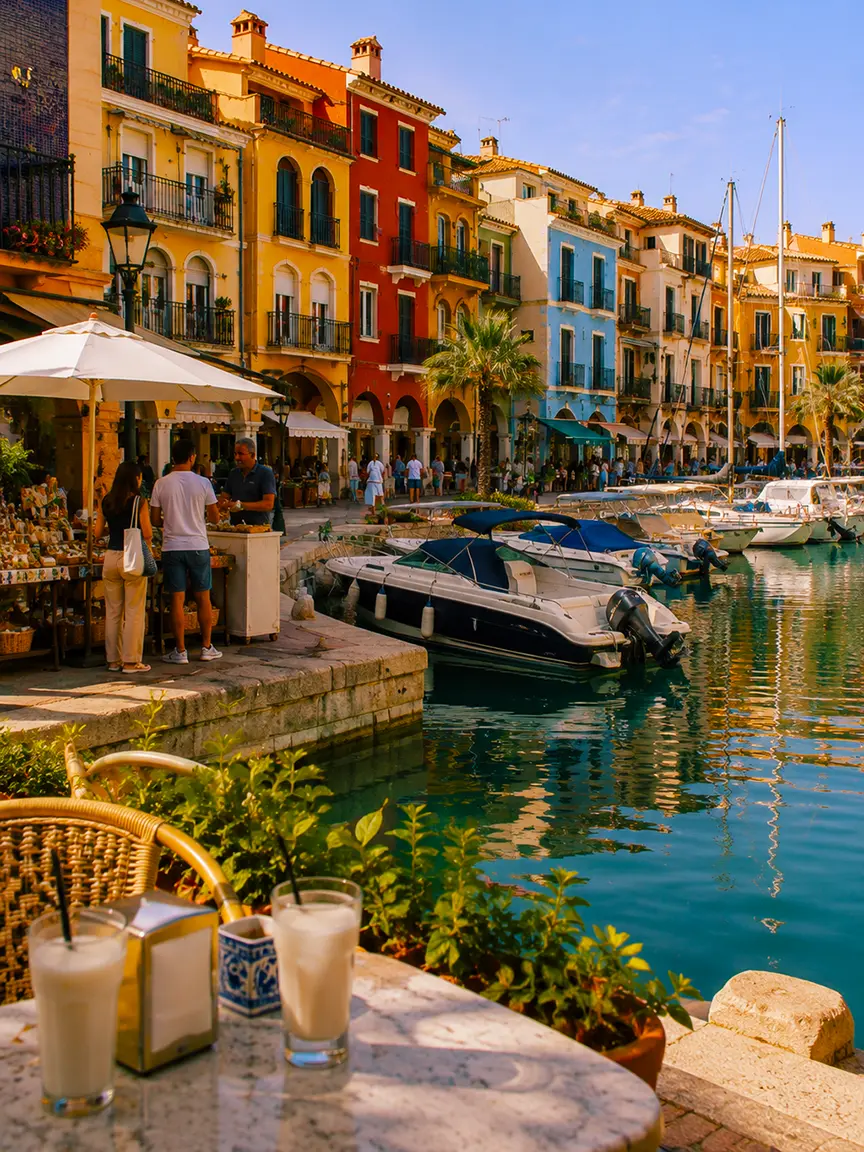
El Cabanyal is Valencia’s old fishing quarter, and it’s having a real moment — tiled facades, small ceramics studios, and a slower pace than the city center fifteen minutes away. A short ride further north is Port Saplaya, the small marina neighborhood locals call “Little Venice” for its canal-front houses in every color — worth a dedicated visit on its own, whether or not it’s paired with anything else. Both sit on most first-timers’ blind spot, which is exactly the point. The Beyond Valencia Bike Tour links El Cabanyal, Port Saplaya, and a horchata stop into one route for anyone who’d rather ride it as a single day than plan the connections themselves.
In the City
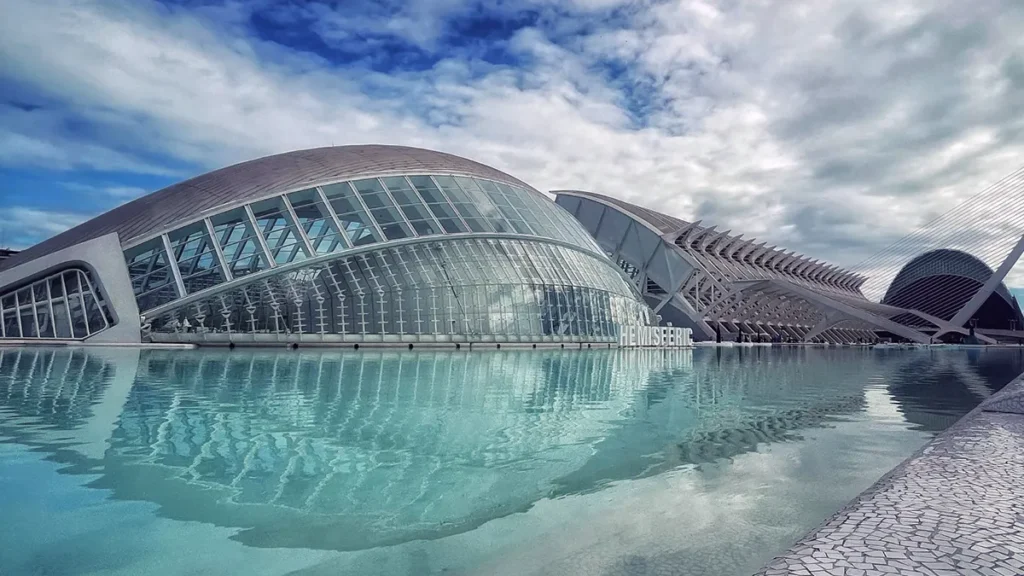
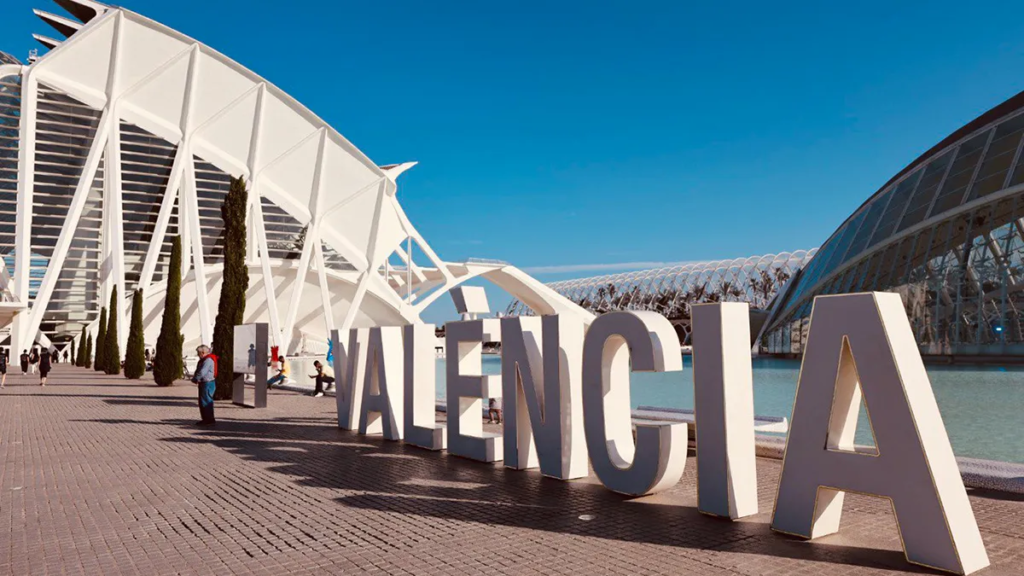
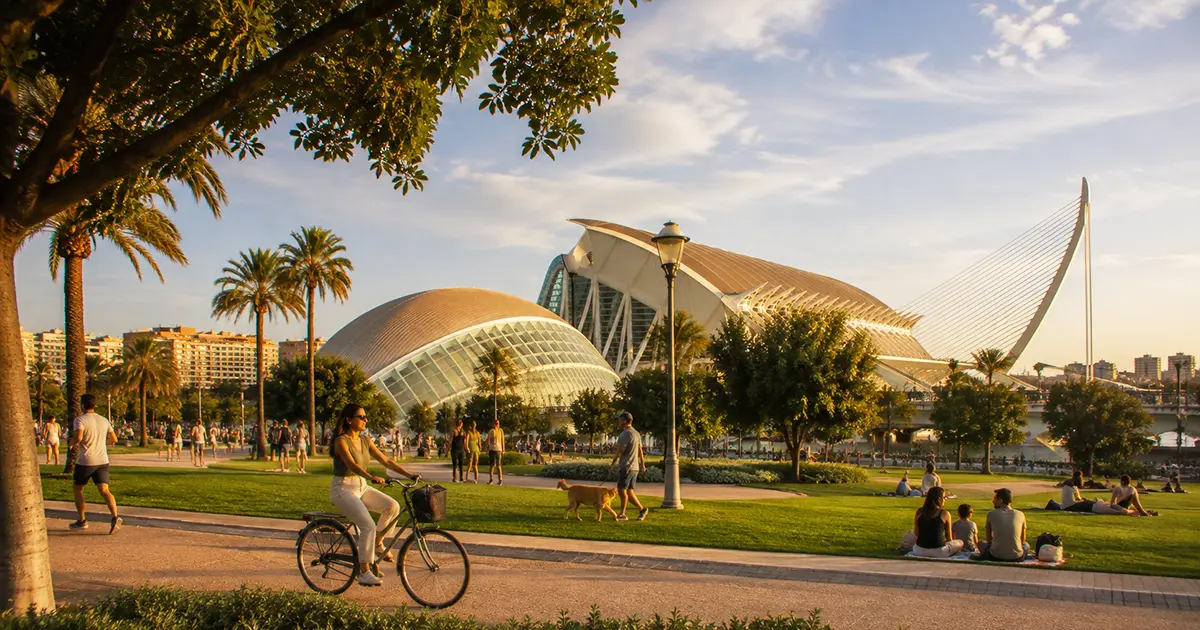
City of Arts and Sciences is unavoidable and worth it — go early morning or after 6pm, when the light does something to the white architecture that photos never quite capture, and the worst of the day’s heat has passed. Midday in September is still strong enough that the wide open plazas around it feel more like an oven than a photo backdrop; plan accordingly.
The old town (Ciutat Vella) rewards aimless walking more than a checklist. El Carmen’s street art shifts block to block and is worth losing an afternoon to without a fixed route. The Central Market is functioning market first, tourist stop second — go for the produce and the jamón stalls, not the souvenir stands near the entrance. The Silk Exchange’s Gothic ceiling is a fifteen-minute visit that’s worth the fifteen minutes. None of this needs a plan. September’s lower heat is exactly what makes wandering possible again, in a way that simply doesn’t work in August’s midday sun.
Beaches
Valencia’s coastline isn’t one beach — it’s several, and they’re not interchangeable.
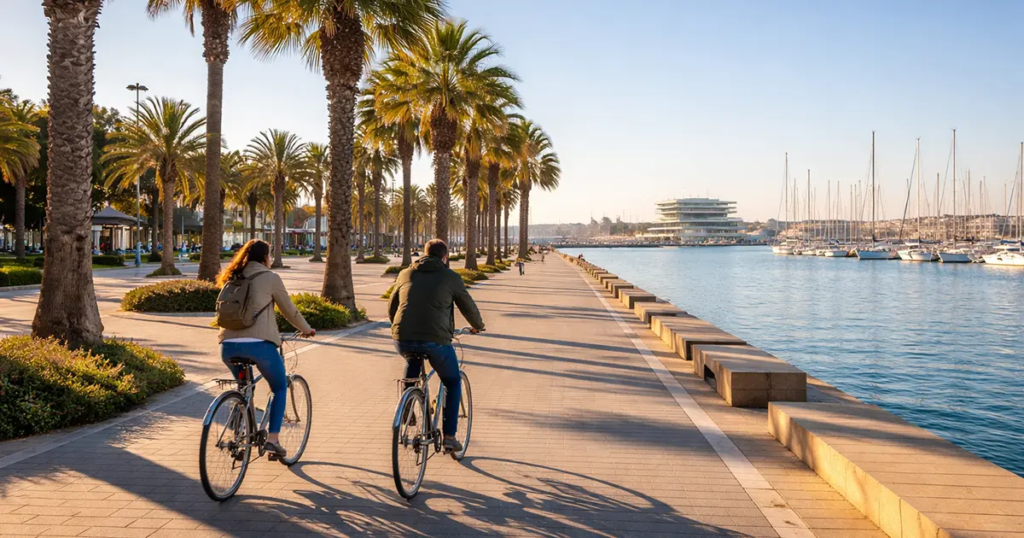
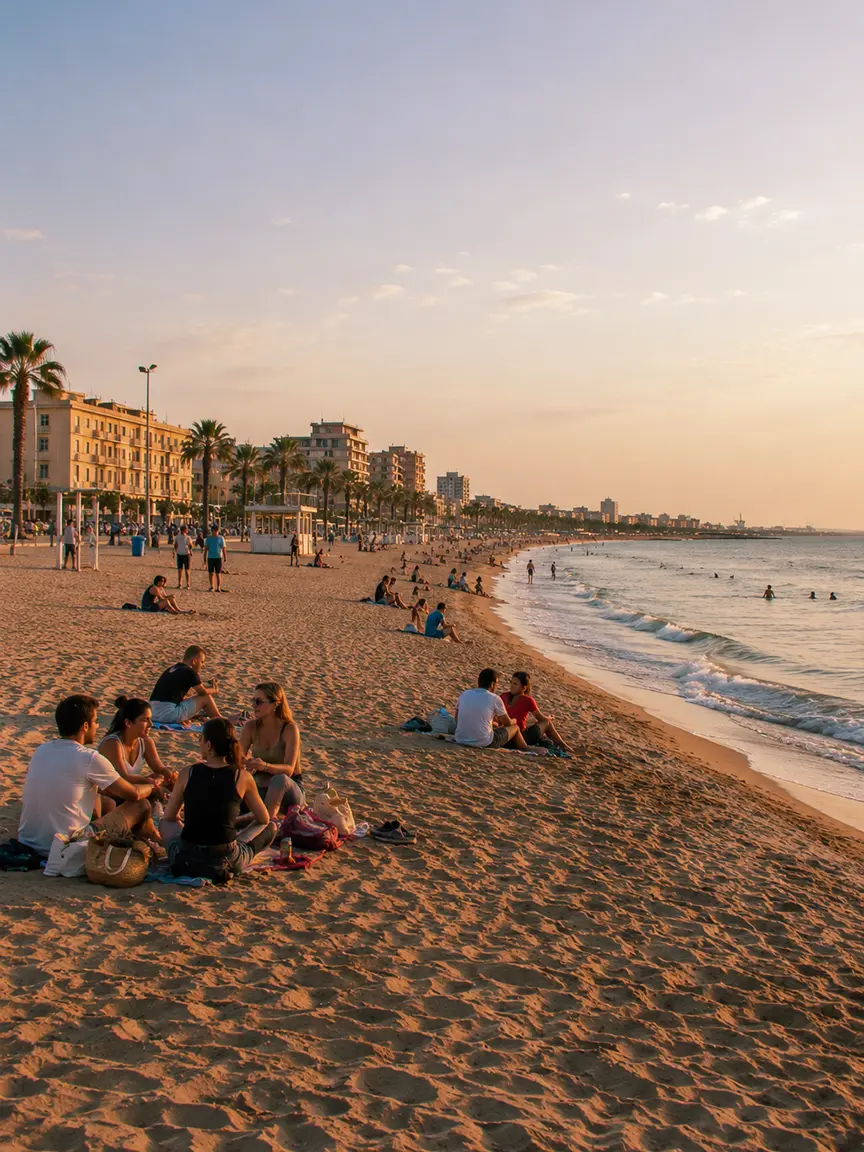
Malvarrosa is the classic city beach: wide, sandy, lined with paella restaurants, a fifteen-minute ride from the center along a dedicated bike path. It’s the one most visitors default to, and for a reason — it’s genuinely good, just crowded on weekends.
Patacona, its northern extension, is quieter and slightly more local, with a better beach-club scene if that’s what you’re after.
El Saler, further south past Albufera, is where Valencia’s own residents actually go to escape the city beaches — pine forest backing onto the sand, far less built up, and worth the extra distance if a quieter afternoon matters more than proximity.
September evenings are nearly ideal: the heat has dropped, the water’s warm, and beach bars stay open late. All three beaches connect to central Valencia via the cycling network. This changes beach-day logistics. Skip public transport timetables. Ride out in the morning, return for lunch in town, then head back for sunset — all one seamless trip.
Valencia Weather in September
September sits between summer and autumn, and the numbers reflect it. Daytime highs run around 28°C (82°F), dropping to roughly 19°C (66°F) overnight — noticeably milder than August’s peak. The sea holds at around 24–25°C (75–77°F) early in the month, cooling gradually to the low 20s°C by late September, still comfortable for swimming throughout.
September isn’t entirely dry. Valencia averages 70mm of rain across about five rainy days, mostly later in the month. Most arrives as short, heavy showers rather than all-day drizzle. But the Mediterranean coast can produce intense downpours in early autumn. Check the forecast — don’t assume guaranteed sunshine.
What’s Happening in Valencia in September 2026
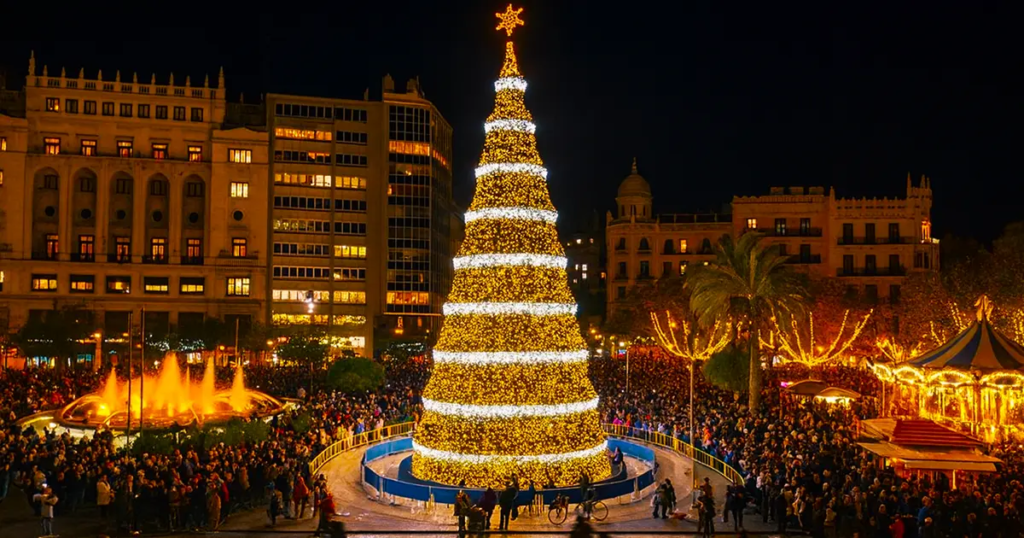
- Spain Sail Grand Prix — September 5–6. Valencia hosts its first-ever SailGP stop — the only Spanish date on the 2026 circuit. F50 catamarans race at over 100 km/h right off La Marina de València. Ticketed access to the Race Stadium; check SailGP’s official site for viewing details closer to the date. Take bike lanes from the center. Avoid driving and parking that weekend.
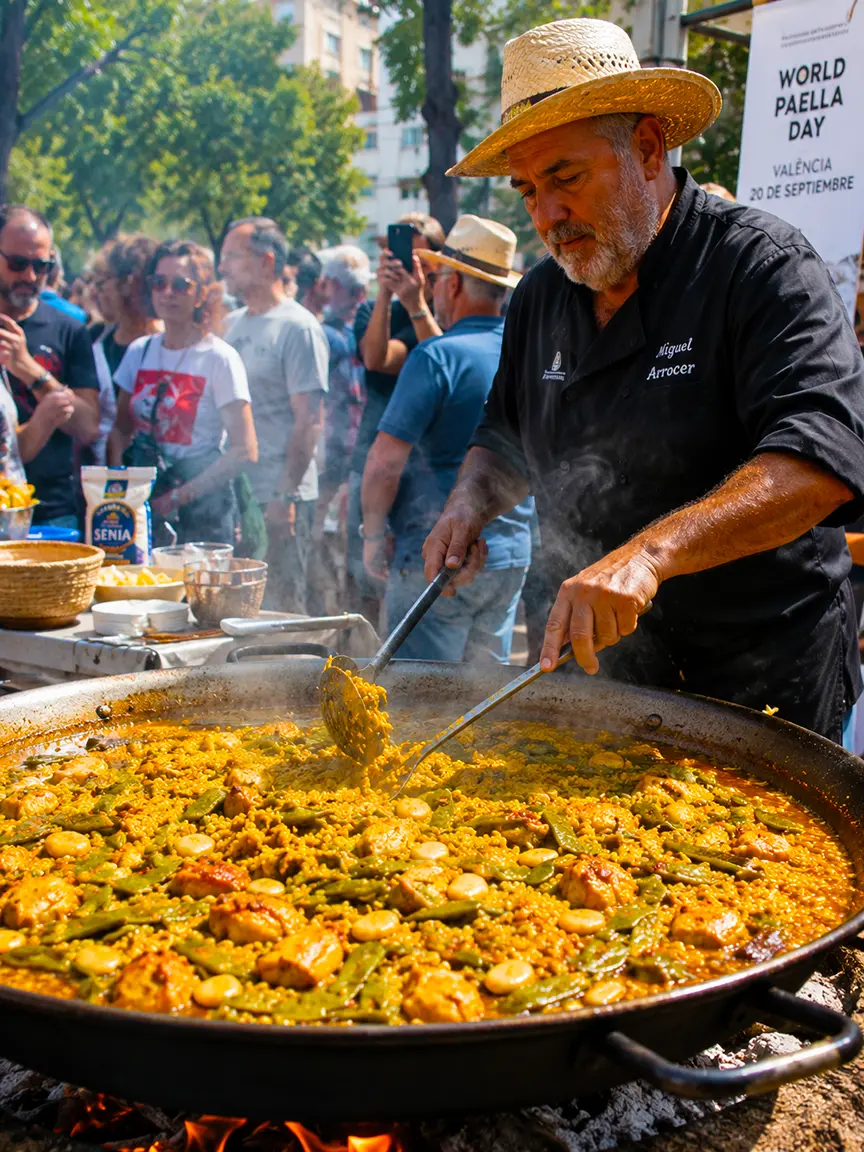
- World Paella Day — September 20. Valencia’s tribute to its own dish, also centered at La Marina de València, with the international World Paella Day Cup final and celebrations around the city. It lines up with the rice harvest at Albufera, so the fields and the festival peak in the same week.
- Abierto València — September 17–25. A city-wide contemporary art week: eighteen galleries across different neighborhoods open their doors with guided routes, talks, and free entry. A good excuse to see parts of the city — El Carmen included — that a typical bike route wouldn’t otherwise cover.
- Rice harvest at Albufera — throughout September. Not a ticketed event, but a real seasonal shift: this is when the paddies turn from green to gold and the harvest machinery is actually out working the fields, which makes it a genuinely different sight from a visit in June or July.
- Neighborhood fiestas restart. After the August lull, local fiestas patronales in Valencia’s neighborhoods and surrounding towns pick back up — smaller and less choreographed than Fallas, with dates that vary by barrio and change year to year, so it’s worth asking locally rather than planning around a fixed date.
Most of this doesn’t need advance booking — SailGP grandstand seats and World Paella Day events aside, if a specific spot matters more than just being there. Otherwise, it’s the kind of calendar that rewards asking a local what’s on that particular week.
Getting Around
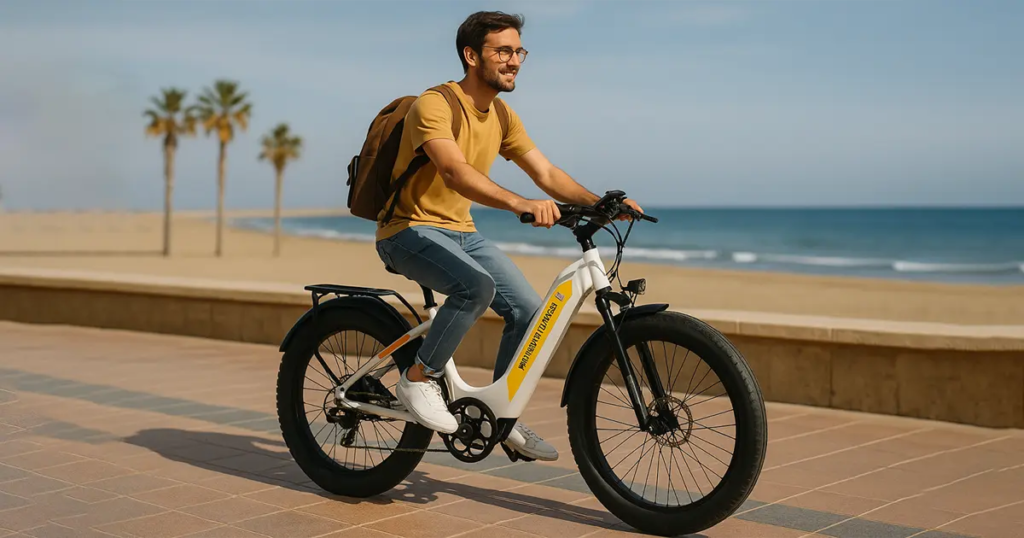
Valencia is flat, compact, and has Spain’s best-connected bike lane network. Cycling isn’t a novelty here — locals actually commute by bike. That makes it one of Europe’s easiest cities to explore on two wheels. Rent for a few hours to see Turia Garden and the old town, or take a full day out to Albufera and back.
Rent for your full stay rather than day-by-day. Key sites (old town, Turia, beaches) are close and flat. For longer routes like Albufera or Cabanyal–Port Saplaya, consider a guided tour. Local guides know details maps miss: which paths flood, where shade exists at midday, and hidden lunch spots.
A Simple Way to Structure the Trip
For anyone who wants a rough shape rather than a rigid itinerary, this is close to how most visits naturally land:
Day 1 — City center. Old town on foot, Central Market for lunch, Turia Garden by bike in the late afternoon once the heat has eased. Rental is enough for this; nothing here needs a guide.
Day 2 — Albufera. Either the boat-and-paella version for a slower, food-focused day, or a self-guided ride down for anyone who’d rather set their own pace and stop where they like.
Day 3 — Cabanyal and Port Saplaya. The fishing quarter, the canal houses, horchata somewhere that isn’t aimed at tourists. Doable independently, or as the guided version if the connecting route and the stops in between matter more than figuring it out alone.
Day 4, if there is one — Beaches. Malvarrosa for the classic version, El Saler if a quieter afternoon matters more than proximity to the center.
Most of this doesn’t need booking weeks ahead in September — the guided days aside, especially around World Paella Day weekend, when it’s worth reserving a little further out. Otherwise: decide the night before, check the weather, go.
FAQ
Yes — it’s widely considered one of the best months. Heat drops from August’s peak, the sea stays warm, and the city’s own rhythm returns after the summer exodus.
Warm rather than hot: daytime highs average around 28°C (82°F), a noticeable drop from August, with far more comfortable evenings around 19°C (66°F).
Yes, on average — around five days with rain over the month, mostly short, heavy showers rather than sustained rain. Worth packing a light rain layer rather than assuming it’ll be dry the whole trip.
Yes — the Mediterranean stays at 24–25°C (75–77°F), cooling gradually but remaining swimmable through late September.
Less than August, especially after the first week or two, once European school holidays end. Weekdays are notably quieter than weekends.
Light layers for daytime heat, something warmer for evenings, swimwear, and a compact rain layer for the occasional downpour — sun protection matters as much as any month in summer.
Three to four days covers the city center, Turia Garden, and one day trip to Albufera or the beaches comfortably. A week allows for a slower pace and trips further out, like Port Saplaya and El Cabanyal.
If you only need luggage storage in Valencia for a few hours during the day, you can leave your bags with Bikes & Tours during our opening hours – especially convenient if you’re renting a bike or joining a tour.
If you need a locker closer to where you’re staying, an early-morning or late-night drop-off, or simply the flexibility of 24/7 access, we recommend Drop&Walk Locker. They offer self-service luggage lockers in Valencia, including a location in the Old Town. Use code VLC20 for 20% off.
September in Valencia doesn’t feel like the end of summer. The city finally breathes. Beaches are warm, rice fields turn gold, terraces are full, and you bike freely without overheating.
Come for the weather if you like. But the reason September works so well is simpler: Valencia feels like Valencia again.