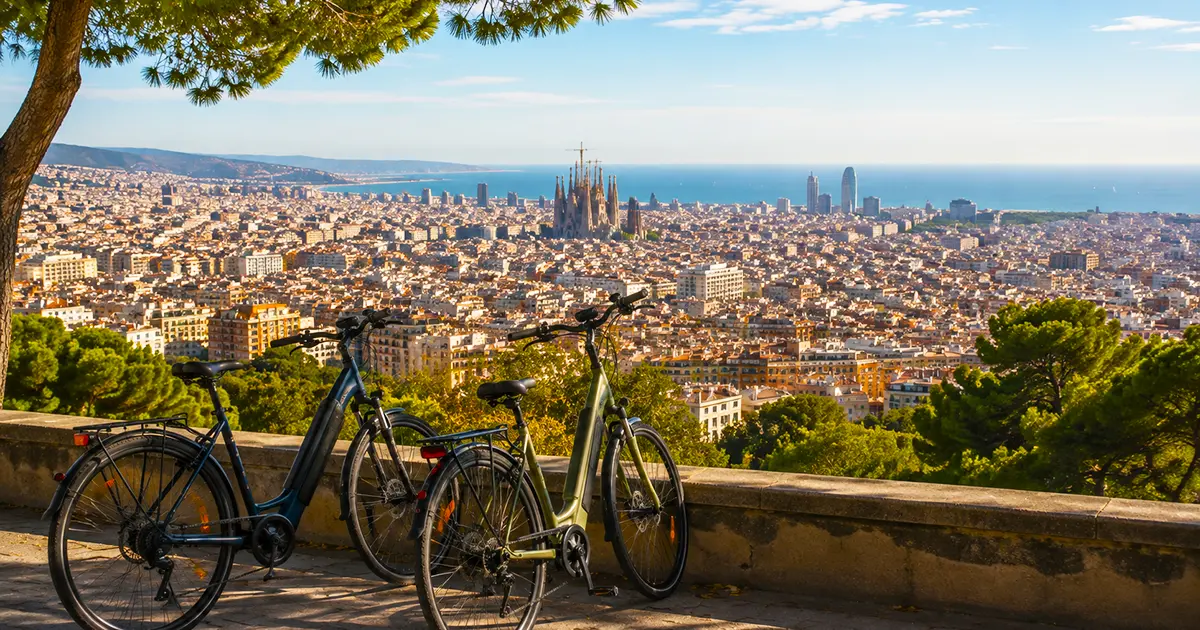
Barcelona in September 2026: Best Things to Do, Beaches & Local Festivals
Barcelona in September 2026 offers a rare combination of beach weather, comfortable sightseeing conditions, and local festivals. The Mediterranean is still warm enough for a swim, the worst of the summer heat begins to ease, and exploring the city on foot or by bike becomes noticeably more comfortable. At the same time, Barcelona’s local rhythm returns after August. Towards the end of the month, La Mercè brings one of the city’s biggest celebrations of the year.
For a first visit, September has another advantage: you don’t have to choose between a city break and a beach holiday. Spend the morning among Gothic streets, cross the city by bike in the afternoon, swim before dinner, and still have a warm evening ahead of you.
The challenge isn’t finding things to do. It’s deciding what deserves your time.
Here’s how we’d spend September in Barcelona.
Why September Works So Well in Barcelona
August is still peak summer: hot days, busy beaches, a city heavily shaped by the holiday season. Barcelona in September 2026 changes the balance without taking summer away completely.
Average daytime highs sit around 26°C (79°F), compared with close to 30°C in August, while evenings average around 17°C (63°F). Walking across Eixample or cycling between neighborhoods at 2pm becomes considerably more pleasant than during the hottest weeks of July and August. You can still plan around the midday sun, but you no longer need to build the entire day around avoiding it.
September also sits at an interesting point in Barcelona’s calendar. Residents return from summer holidays, neighborhood businesses settle back into their normal rhythm, and the cultural season picks up again. Don’t confuse that with an empty city, though. Barcelona remains one of Europe’s busiest destinations, and landmarks such as Sagrada Família, Park Güell and Casa Batlló still benefit from advance booking.
What changes is the balance: Barcelona’s beaches without quite as much summer intensity, comfortable conditions for exploring, and a city that increasingly feels like itself again.
Barcelona by Bike in September
Barcelona looks surprisingly compact on a map. Then you try to walk from the Gothic Quarter to Sagrada Família, continue through Eixample, visit Parc de la Ciutadella and finish at the beach. The individual distances aren’t enormous, but they add up quickly. That’s one reason cycling works so well here.
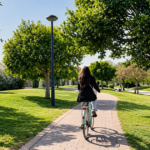
Barcelona has an extensive network of dedicated cycle lanes connecting most of the areas visitors actually want to see. Eixample, El Born, Ciutadella, Port Vell and the waterfront all sit within a fairly practical cycling area.
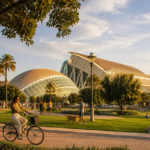
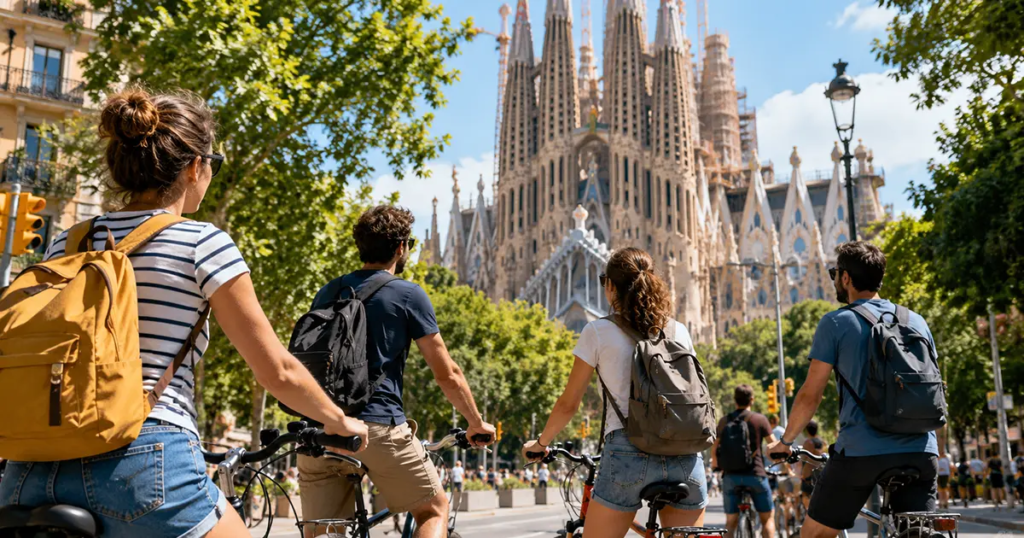
A bicycle also lets you see what happens between the landmarks. On the metro, you disappear underground and reappear beside the basilica. On a bike, medieval Barcelona gradually gives way to the geometric grid of Eixample: streets widen, architecture changes, Modernisme starts appearing around you. The same happens toward the Mediterranean. Instead of treating El Born, Parc de la Ciutadella, Barceloneta and the Olympic waterfront as four separate stops, they become parts of one continuous route.
That’s the real advantage of seeing Barcelona by bike: not simply getting somewhere faster, but understanding how the city fits together.
If you already know what you want to see, bike rental in Barcelona gives you complete freedom to build your own route. If it’s your first visit, a guided bike tour in Barcelona can make more sense. A guide keeps you on a planned route and points out interesting facts and context about the places you pass. At Bikes & Tours Barcelona, we offer guided bike tours for discovering the city with a local guide, and both regular and electric bike rentals for exploring independently. Which one to choose depends mostly on where you plan to ride.
Regular Bike or E-Bike in Barcelona?
Much of central Barcelona and the Mediterranean waterfront is easy on a standard city bike. If your plans involve El Born, Parc de la Ciutadella, Port Vell, Barceloneta and the beaches, you probably don’t need electric assistance. A regular bike is simple, comfortable and well suited to these routes.
But Barcelona changes as you move inland. Head toward Gràcia and Park Güell, climb toward Montjuïc, or plan a longer day crossing several neighborhoods, and you’ll start noticing the elevation.
That’s where an e-bike in Barcelona earns its place. It changes how much of the city you can comfortably include in one day. Longer distances become less important, hills stop determining the route, and you arrive at the next neighborhood ready to explore rather than ready to sit down.
The simplest rule: choose a regular bike for central Barcelona, the Old Town and the coast; choose an e-bike for longer rides, hillier neighborhoods, or a more relaxed day with less physical effort. If you’re unsure, choose based on the route rather than your fitness level.
Things to Do in Barcelona in September 2026
Start with the Gothic Quarter and El Born
Some parts of Barcelona are better without wheels. The Gothic Quarter is one of them.
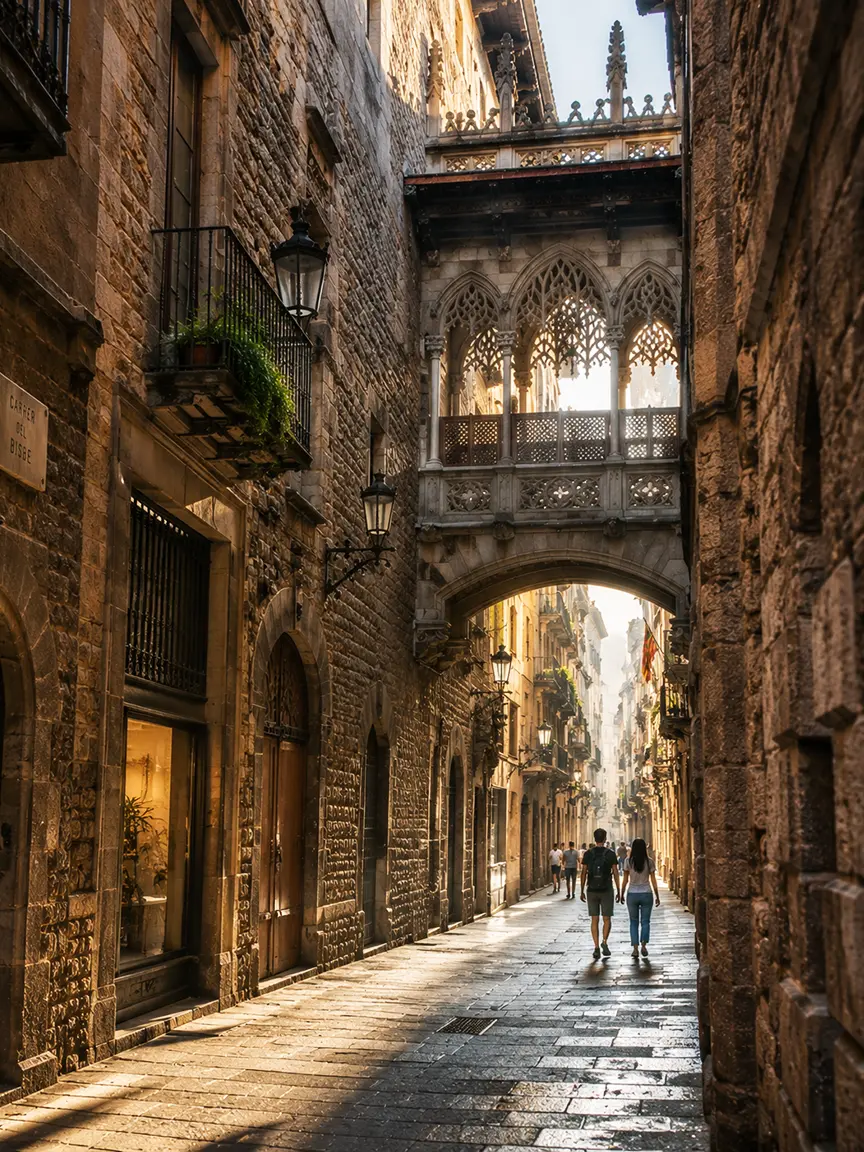
Go early if you can. Before the busiest streets around the Cathedral and La Rambla fill up, the neighborhood is easier to read. And don’t treat it as a single attraction. Its appeal is the network itself: narrow medieval streets opening unexpectedly into squares, fragments of Roman Barcelona between later buildings, balconies almost meeting above alleyways, small details that disappear when you’re rushing toward the next pin on Google Maps.
Barcelona Cathedral is the obvious landmark, but make time for Plaça de Sant Felip Neri, the Roman walls, and the smaller streets connecting the neighborhood to El Born.
Then cross into El Born. The architecture stays old, but the atmosphere changes. Medieval streets mix with cafés, independent shops, restaurants and everyday neighborhood life. Santa Maria del Mar is the architectural anchor, but El Born works best when you leave yourself enough time to not follow a checklist.
From here, Barcelona naturally opens toward Parc de la Ciutadella and the sea. That’s a good moment to get on a bike.
See Gaudí — But See the City Around Him Too
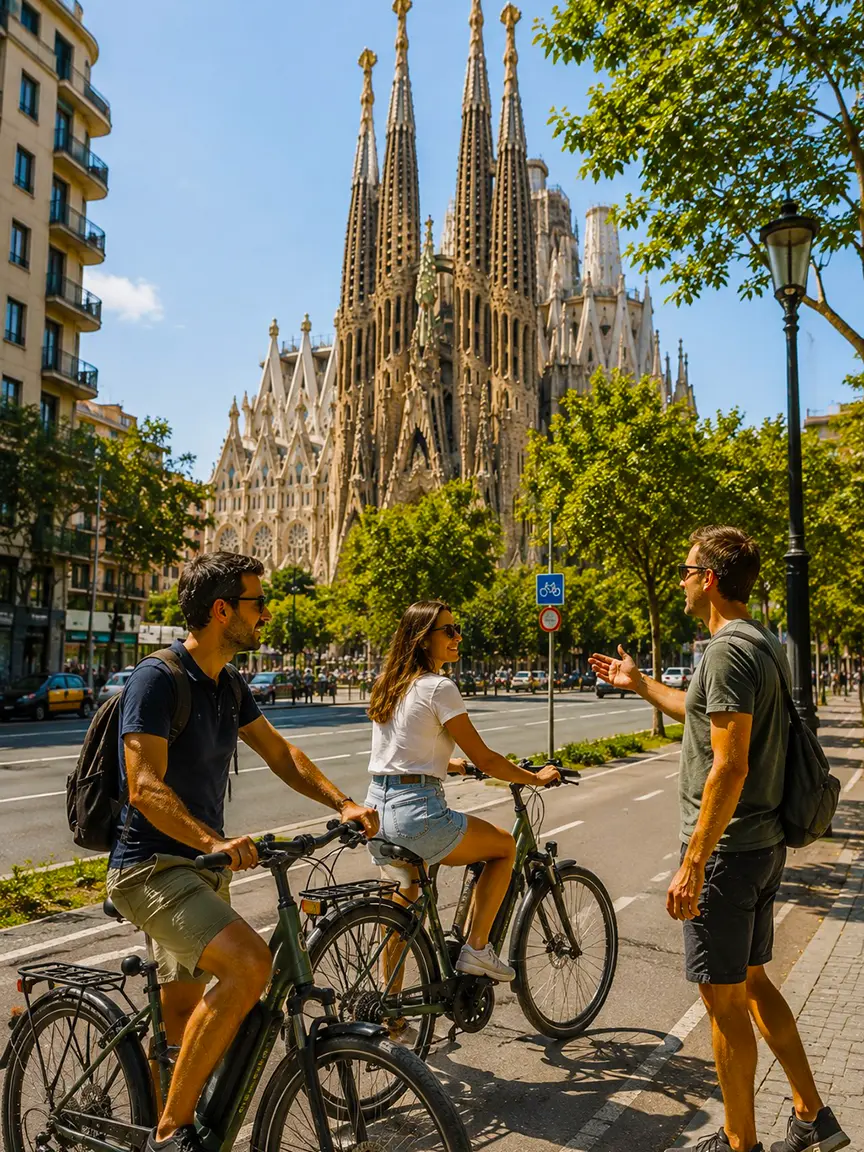
Sagrada Família deserves its reputation, and so do Casa Batlló and La Pedrera. But there’s a risk in moving from one Gaudí building to another without paying attention to the city connecting them: Eixample.
Its enormous 19th-century grid, distinctive chamfered corners and broad avenues represented a completely different vision of urban life from the dense medieval streets nearby. Passeig de Gràcia shows what happened when wealthy families and ambitious architects competed within that new city. Casa Batlló and La Pedrera make more sense once you see them as part of this environment rather than as isolated monuments.
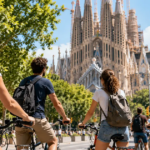
Then ride or walk toward Sagrada Família. Even without going inside, the approach is part of the experience. The basilica appears above ordinary apartment blocks long before you reach it, something photos taken directly outside rarely capture.
If you do want to go in, reserve ahead. September may be past the July–August peak, but Sagrada Família doesn’t suddenly become a walk-in attraction.
Parc de la Ciutadella and Arc de Triomf
After Gothic streets and Gaudí architecture, Ciutadella gives the day some breathing room. Locals exercise here, families picnic, musicians appear, people lie on the grass, and cyclists cross the park between El Born and the waterfront.
The monumental Cascada is the obvious visual centerpiece, but the park’s real value is being a place where Barcelona stops demanding your attention for a while.
From Ciutadella, continue toward Arc de Triomf. Unlike many European triumphal arches, this one wasn’t built to mark a military victory. It served as the main entrance to the 1888 Universal Exposition, an event through which Barcelona was presenting itself as a modern European city.
The broad promenade between the Arc and Ciutadella is also one of the easiest stretches in the city to cycle.
Two Different Ways to Discover Barcelona by Bike
Not every Barcelona bike tour shows you the same Barcelona, so it’s worth deciding what you actually want from the ride before choosing one.
The first approach is the landmarks route: the Barcelona most first-time visitors came expecting. Think Eixample, Sagrada Família, Passeig de Gràcia, El Born, Arc de Triomf and Parc de la Ciutadella. It works particularly well early in a trip because it gives you a mental map of the city while connecting several major sights.
The second approach follows Old Barcelona toward the Mediterranean: the Gothic Quarter, Port Vell, Barceloneta, the waterfront, Ciutadella, and the relationship between the historic city and the sea. Fewer blockbuster landmarks, more contrast between neighborhoods.
At Bikes & Tours Barcelona, we run both types of guided tour because trying to squeeze everything into one route usually means seeing more but experiencing less. Our guide, Barcelona by Bike: Landmarks or Local Atmosphere?, compares the two in more detail.
For a first visit, the classic highlights route usually makes the most sense. If you’ve already seen the major Gaudí landmarks, or you’re more drawn to old streets and neighborhoods, the Gothic Quarter and coast offer a very different Barcelona.
If you’re staying several days, doing one guided tour early in the trip and renting a bike later works particularly well. The tour gives you orientation; the rental gives you the freedom to return to what interested you most.
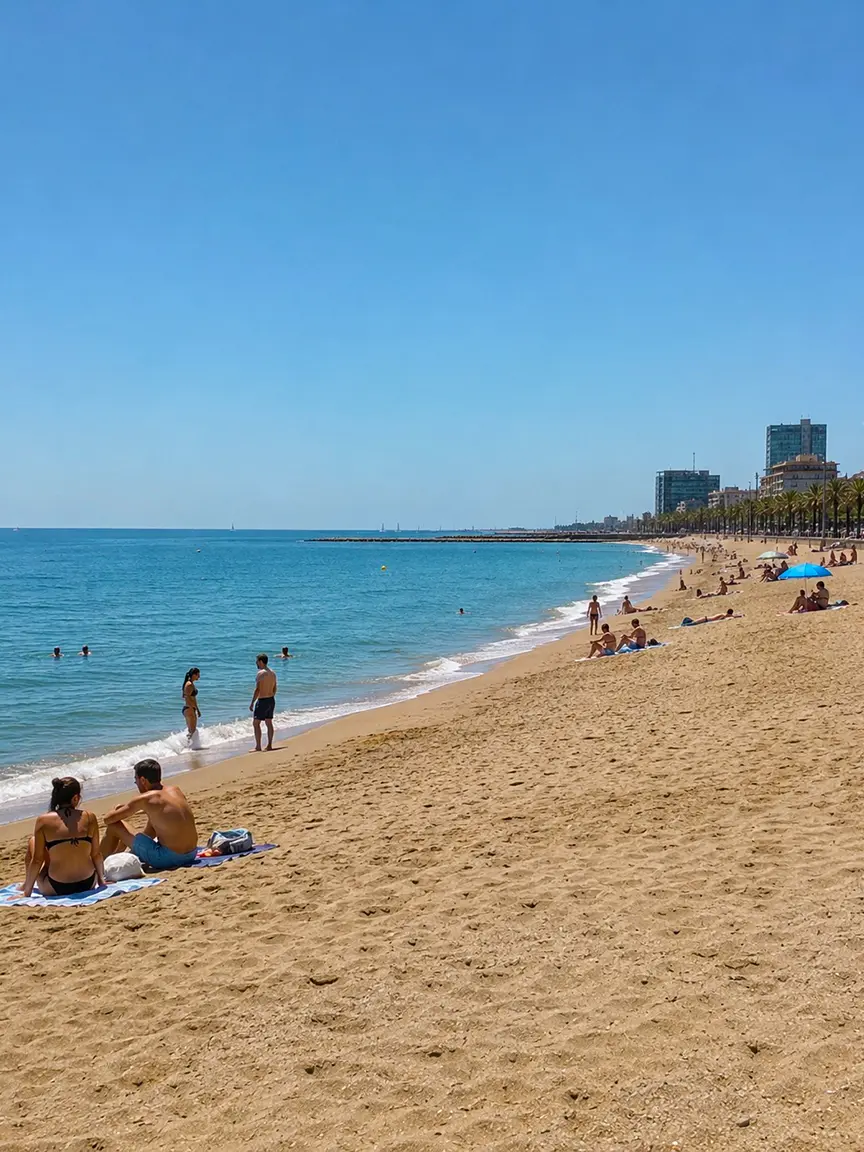
Barcelona Beaches in September
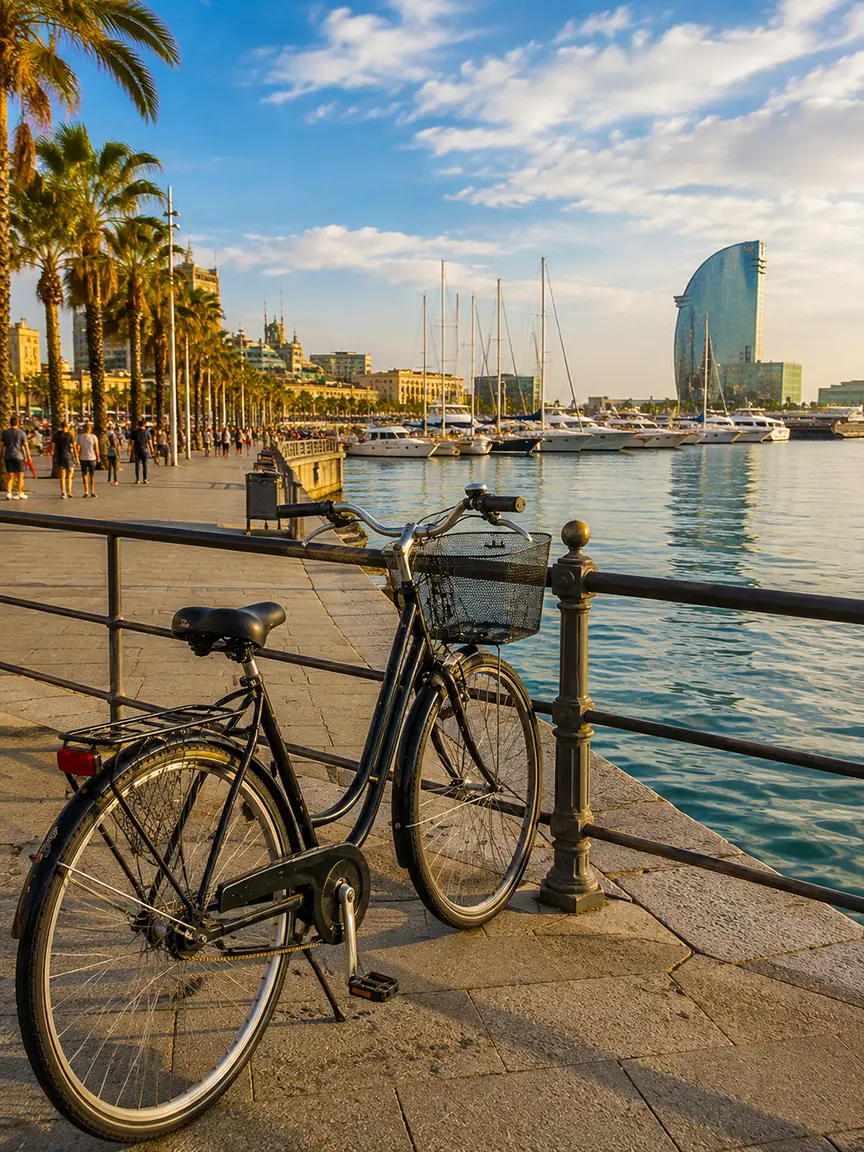
Don’t let the word “September” convince you that beach season is over. Barcelona’s Mediterranean climate keeps the month warm, and for many visitors it’s actually more pleasant on the coast than August. It’s still warm enough to swim, but more comfortable for walking or cycling along the waterfront.
Barcelona has several urban beaches, and they’re not interchangeable.
Barceloneta. The classic choice. It’s closest to the Old Town, easy to combine with Port Vell, and surrounded by restaurants, bars and the historic fishing neighborhood behind it. If you’ve only got a few hours and want to finish sightseeing with your feet in the Mediterranean, this is the obvious choice. Its downside is exactly what makes it convenient: everyone knows where it is. Don’t come here looking for solitude.
Nova Icària. Continue northeast and the waterfront gradually becomes less intense. It’s a more relaxed alternative without taking you far from central Barcelona, and particularly easy to combine with Parc de la Ciutadella and the Olympic waterfront.
Bogatell. For a longer beach afternoon, this is often our preferred balance: more space, fewer Old Town day-trippers, and a waterfront where cycling, running, volleyball and everyday Barcelona life all share the same stretch of sand.
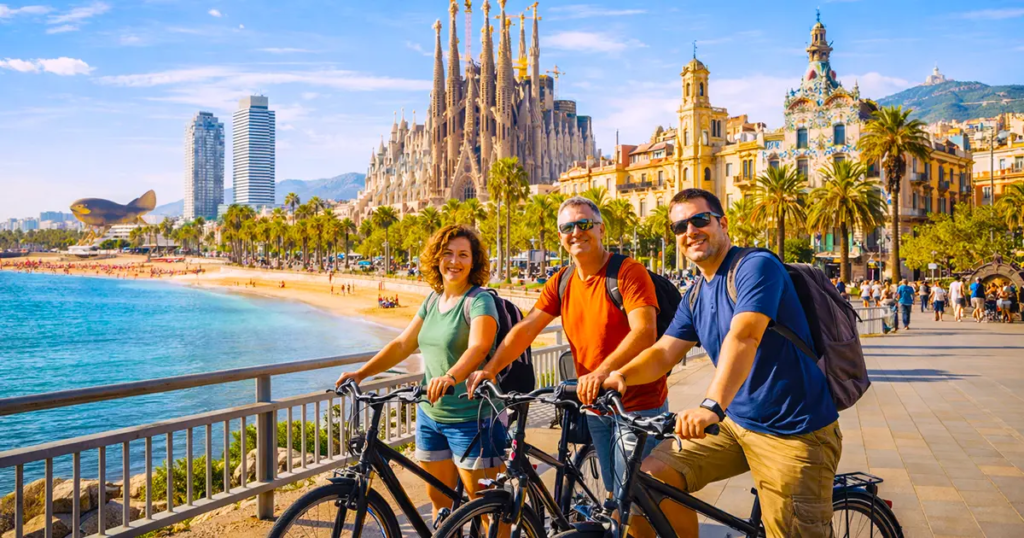
Getting there is half the point. Rent a bike near the center, ride through Port Vell and Barceloneta, continue past the Olympic waterfront, and simply stop when the beach feels right. You don’t need a tour for this. It’s one of Barcelona’s easiest independent rides, and September is exactly the kind of month when an unplanned afternoon along the Mediterranean works.
Barcelona Weather in September
Barcelona in September 2026 is warm rather than overwhelmingly hot. Typical daytime highs sit around 26°C (79°F), with average lows around 17°C (63°F). Early September often still feels like summer; by the end of the month, mornings and evenings turn noticeably fresher.
That makes it a good month for active sightseeing. Walk through the Old Town in the morning, cycle across the city in the afternoon, and still spend an hour at the beach without organizing the whole day around escaping the heat.
There’s one trade-off: autumn is one of Barcelona’s wetter periods, so September weather is less predictable than midsummer. Short showers and occasional heavier rain are possible.
That doesn’t mean planning the trip around bad weather. It means keeping the itinerary flexible. A sunny day is worth using for the waterfront or a longer ride; a rainy one is the day for museums, markets, Sagrada Família or one of Barcelona’s Modernista interiors.
What’s Happening in Barcelona in September 2026
Events aren’t the reason to visit Barcelona in September 2026, but they can change the atmosphere of the city completely while you’re here. Two dates matter.
September 11 — La Diada. The National Day of Catalonia. This isn’t primarily a tourist festival. It’s a culturally and politically significant day, marked by commemorations, gatherings and demonstrations, and a glimpse of something fundamental to understanding the city: Catalan identity here isn’t just local folklore, it’s part of how Barcelona understands itself.
Practically, parts of the center can get busy and some streets may see temporary closures. If you’re cycling that day, check the route before setting off.
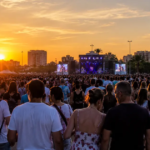
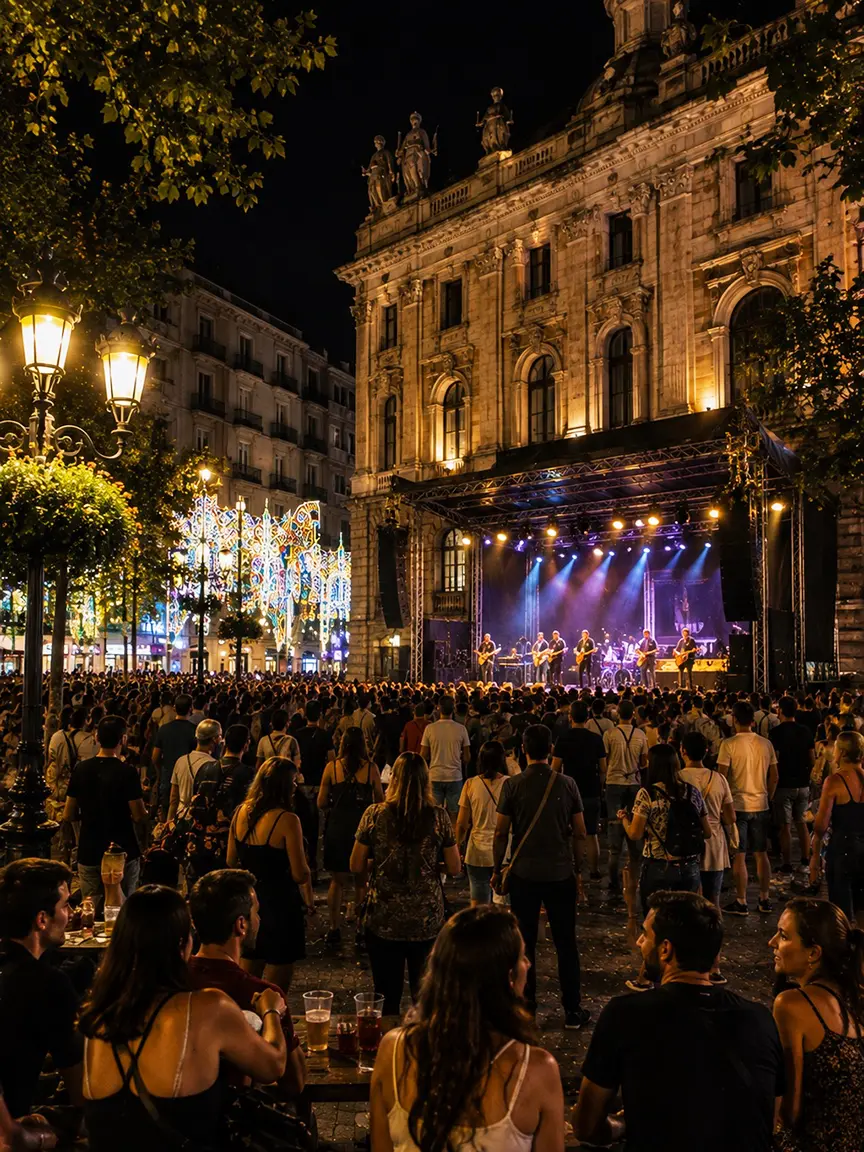
September 23–27 — La Mercè. Barcelona’s major annual city festival, with the feast day itself falling on September 24, an official public holiday in the city. The festival spreads across Barcelona through concerts, performances, public spaces and traditional Catalan celebrations rather than being confined to one festival ground.
You don’t need to study the full program. Pick one or two things you really want to see and leave space for whatever you run into.
Castellers, the famous human towers, are hard to appreciate from photos. The scale and coordination make far more sense standing in the square watching one go up. Correfoc offers the opposite atmosphere: fire, sparks, noise and traditional figures moving through the streets.
In 2026, La Mercè closes on September 27 with the Piromusical, the festival’s traditional fireworks-and-music finale, moving for the first time to Bogatell Beach.
Movement through parts of the city can change significantly during the festival, so if you’re on a bike, don’t assume yesterday’s route is open today. Check the day’s program, then adapt. Barcelona is better at improvisation than rigid itineraries anyway.
Getting Around Barcelona: Walking, Metro, Bike or E-Bike?
The best answer is all four, just not in the same places.
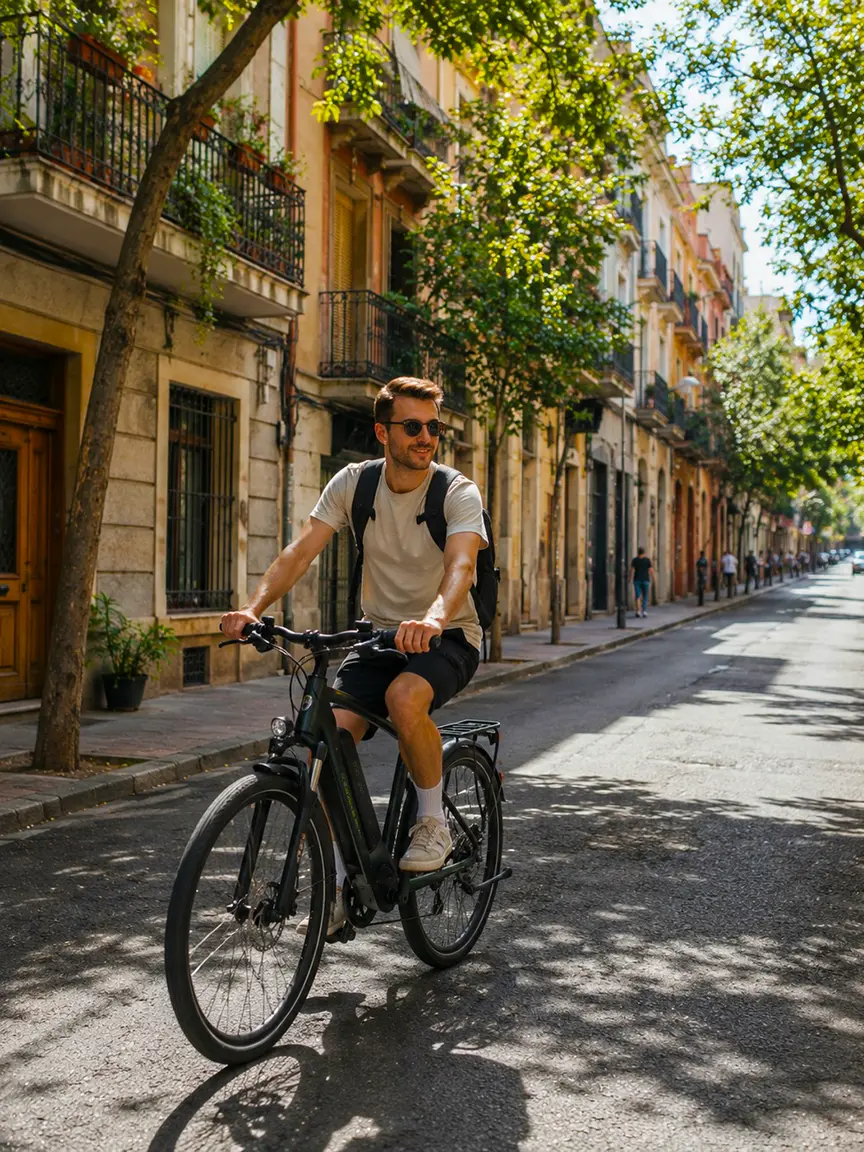
Walk through the Gothic Quarter and the narrowest parts of El Born. These neighborhoods reward attention to detail, and a bicycle gives you no advantage on busy pedestrian streets. Use the metro when you need to cross a large distance quickly. Use a regular bike for central Barcelona, Eixample, Ciutadella and the waterfront. Choose an e-bike when the route gets longer or starts climbing.
A sequence from El Born through Ciutadella to the Olympic waterfront and Bogatell is ideal on a regular bicycle. Add Gràcia, Park Güell or Montjuïc, and the calculation changes. That’s where electric assistance starts earning its place.
This is also why it’s worth not thinking of a bicycle simply as transport. The metro gets you efficiently from A to B; a bike lets you experience what’s in between. For independent travelers, bike rental in Barcelona gives you the freedom to build those connections yourself. If you’re new to the city, a guided tour gives you a planned route and context first.
One practical note whichever bike you choose: lock it properly. Barcelona isn’t a city where you should casually lean a rental bike against a wall while you disappear for lunch. Use the lock provided and follow the rental company’s parking instructions.
A Simple 3-Day Barcelona Itinerary for September
Three days isn’t enough to see everything in Barcelona. That’s fine. Trying to see everything is usually what makes a three-day trip exhausting. Instead, give each day a different character.
Day 1 — Understand the City. Start with the Barcelona everyone came to see. Spend the morning around Eixample and Passeig de Gràcia, seeing Casa Batlló and La Pedrera before continuing toward Sagrada Família. Reserve a timed ticket if you’re going inside.
This is also the day a guided Barcelona bike tour makes the most sense. Taking one early gives you orientation: how Eixample connects to the Old Town, where Ciutadella sits relative to the waterfront, and which neighborhoods you’ll want to return to. Finish around Arc de Triomf and Parc de la Ciutadella, then walk into El Born for the evening.
Day 2 — Old Barcelona to the Mediterranean. Start early in the Gothic Quarter: Barcelona Cathedral, the smaller streets, the Roman walls, and a bit of deliberate getting lost. Move into El Born, visit Santa Maria del Mar, and continue toward Port Vell.
By lunchtime you’ll have reached the sea. That’s a good point to switch from walking to cycling. Rent a regular bike and follow the waterfront from Barceloneta toward Nova Icària and Bogatell. Stop for a swim if the weather cooperates, eat something by the sea, and ride back as the afternoon temperature drops.
Day 3 — Go Further. This is where an e-bike gets interesting. Instead of collecting whatever landmarks remain on your list, pick a part of Barcelona that takes a little more distance or elevation: Gràcia and Park Güell, or Montjuïc with its viewpoints, gardens and Olympic legacy.
You can do either on a regular bike if you enjoy climbing, but if sightseeing rather than exercise is the goal, an e-bike lets you spend more energy exploring and less getting uphill.
Or forget the bicycle completely. Spend the day in Gràcia, visit a museum, go back to your favorite neighborhood, or just return to the beach. If you’re visiting during La Mercè, your third day may end up becoming festival day regardless of what the itinerary said. Let it.
What to Pack for Barcelona in September 2026
Pack mostly for summer, with a small concession to autumn. Light clothing works for most days. Bring comfortable walking shoes, swimwear, sunglasses and proper sun protection. Add a light jacket or overshirt for evenings, especially later in the month, and a compact rain layer or small umbrella, since September weather can shift faster than midsummer’s.
If you’re planning to cycle, don’t overthink it. Comfortable everyday clothes and closed shoes are enough for normal city riding or a guided tour.
What matters more is planning the day around conditions: longer ride, go earlier; beach looking perfect, change the afternoon plan; rain forecast tomorrow, move Sagrada Família or a museum to that day.
FAQ
Yes. It’s one of the best months for combining sightseeing, cycling and the beach. Temperatures are generally lower than in July and August, while the Mediterranean and beach culture remain very much part of the experience.
Still warm. Average highs are around 26°C (79°F), with lows around 17°C (63°F). Early September can feel like full summer; evenings cool down toward the end of the month.
Yes, particularly during warm, sunny weather. The Mediterranean holds much of its summer warmth even as daytime temperatures ease.
It can. Autumn is one of Barcelona’s wetter periods, so September carries a higher chance of rain than midsummer. Keep the itinerary flexible rather than planning around it.
Usually less than at the height of July and August, though sunny weekends can still draw crowds. Barceloneta sees the most visitors thanks to its location; Nova Icària and Bogatell generally offer more space.
Yes. An extensive network of dedicated cycle lanes connects most major neighborhoods and attractions, and the flatter central and coastal areas suit ordinary city bikes well.
A regular bike is usually enough for El Born, Eixample, Ciutadella and the waterfront. An e-bike is more useful for longer days or hillier routes toward Gràcia, Park Güell and Montjuïc.
Rent if you already know where you want to go and value flexibility. A guided tour is especially useful early in a first visit, since the route is planned and you get context along the way. A good combination is a tour on day one and an independent rental later.
A route connecting Sagrada Família, Eixample, Passeig de Gràcia, El Born and Parc de la Ciutadella gives the clearest introduction to the city. If you’ve already seen the major Gaudí sights, an Old Town and coastal route through the Gothic Quarter, Port Vell and the waterfront offers a very different experience.
September 11 is La Diada, the National Day of Catalonia. La Mercè runs from September 23–27, 2026, with concerts, performances and traditional Catalan events across the city. September 24 is the main feast day, and the festival concludes on September 27 with the Piromusical at Bogatell Beach.
Light summer clothing for most days, a light layer for evenings, comfortable shoes, swimwear and sun protection. Bring a compact rain layer too, since the weather can be less predictable than midsummer.
Three days gives a strong introduction: one for the major landmarks, one for the Gothic Quarter and Mediterranean waterfront, and one for Gràcia, Park Güell, Montjuïc or whatever interested you most on the first two days. Four or five days lets you slow down considerably.
Final Thoughts
Barcelona in September 2026 doesn’t really feel like the end of summer. The Mediterranean is still there when you want it, but the city becomes easier to explore. You can spend longer outside, cross several neighborhoods by bike without the ride becoming the hardest part of the day, and feel Barcelona’s local rhythm returning after August.
See Sagrada Família. Walk through the Gothic Quarter. Do the things you came for. Then leave some space. Get on a bike, follow the coast farther than planned, stop at a beach because the weather looks too good to keep moving, or take an e-bike into Barcelona’s hillier neighborhoods.
A good September itinerary gives you a structure. Let Barcelona change it.