Turia Gardens Valencia: What to See & How to Explore by Bike
Turia Gardens is one of those places that changes the way you understand Valencia. On a map, it looks like a long green ribbon cutting through the city. Once you’re inside, it feels more like a collection of parks, sports areas, gardens, playgrounds and cultural landmarks. And they all are connected by the former riverbed.
Known locally as Jardín del Turia, the park stretches for more than nine kilometres from Parque de Cabecera in the west towards the City of Arts and Sciences in the east. It’s free to enter and particularly well suited to walking and cycling.
But you don’t need to ride the whole park from one end to the other. You can spend a couple of hours here, make a half-day of it with a picnic and several stops, combine the ride with Bioparc Valencia, or continue towards the Mediterranean coast.
That flexibility is one of the reasons we like exploring Turia Gardens by bike.
What Is Turia Gardens?
It’s difficult to understand Jardín del Turia without knowing why there is such a long park running through the middle of Valencia.
The gardens occupy the former bed of the River Turia. After the devastating flood of 14 October 1957, the river was diverted south of Valencia to reduce the risk of future flooding. Plans once envisaged using the old riverbed for a major road, but public pressure instead helped secure its future as green public space. The gardens opened in 1986, with different sections designed by different urban planners and landscape architects.
That history explains the unusual shape of the park today.
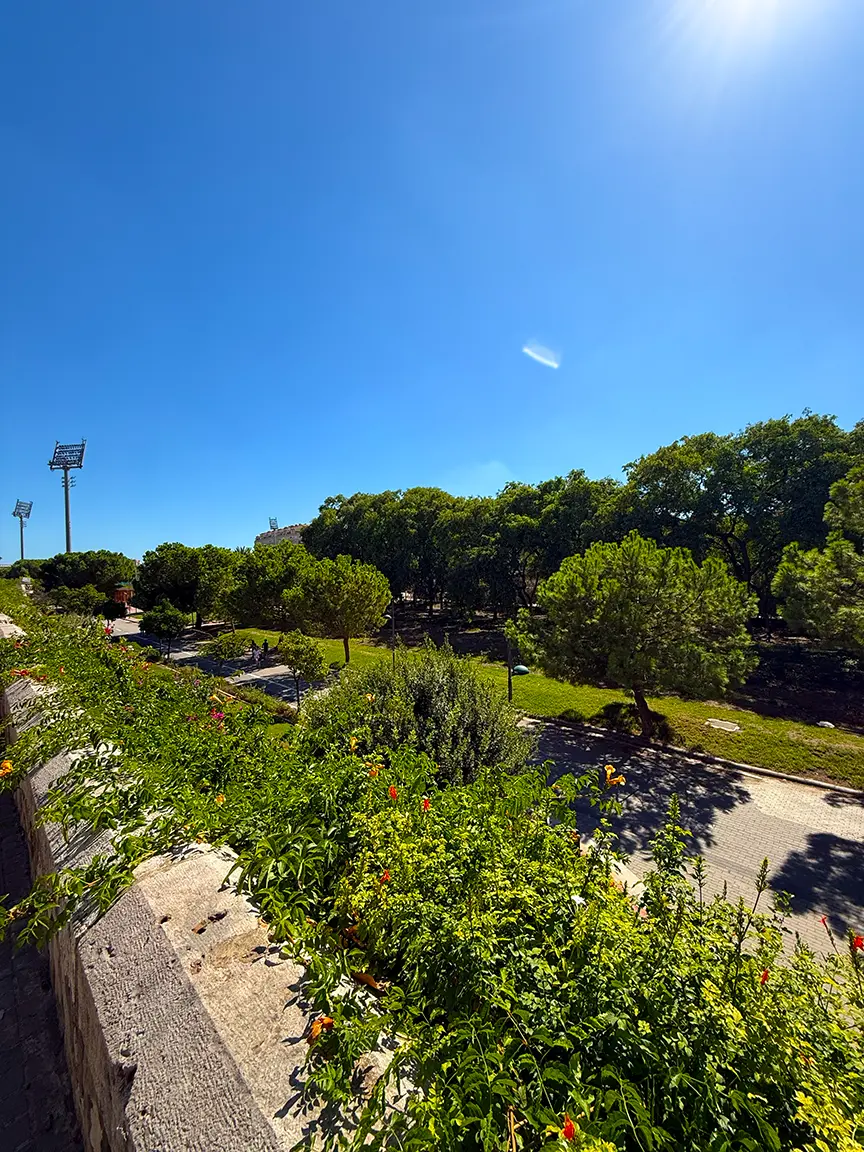
Rather than being one enclosed square of greenery, Turia Gardens crosses Valencia from west to east, passing beneath 18 bridges and alongside historic neighbourhoods, museums, sports facilities and some of the city’s best-known landmarks.
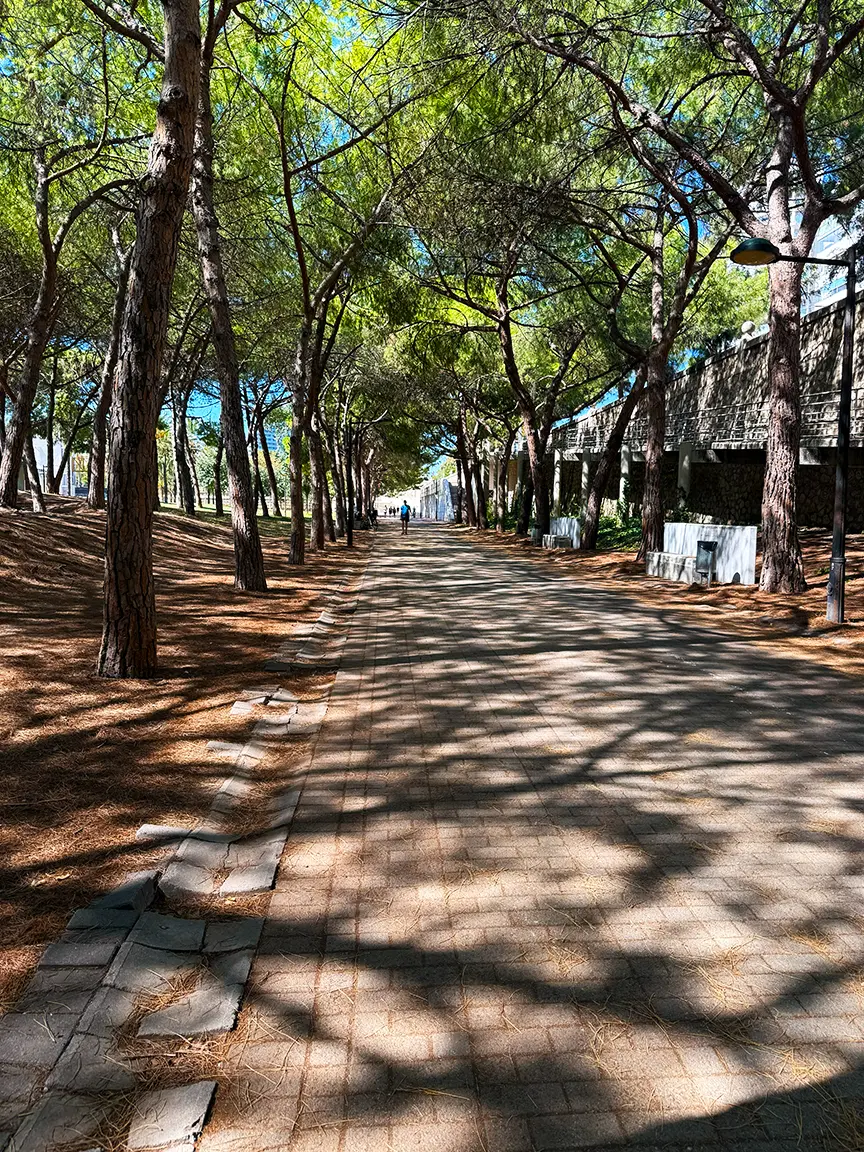
It also explains why cycling works so well here: you can cover a substantial part of Valencia while spending much of the journey away from normal city traffic.
What to See in Turia Gardens?
There isn’t one single attraction that defines the park. Its character changes as you move through it, which is why we prefer choosing a handful of stops rather than treating Turia Gardens Valencia as a sightseeing checklist.
City of Arts and Sciences
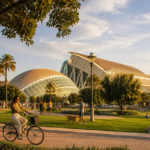
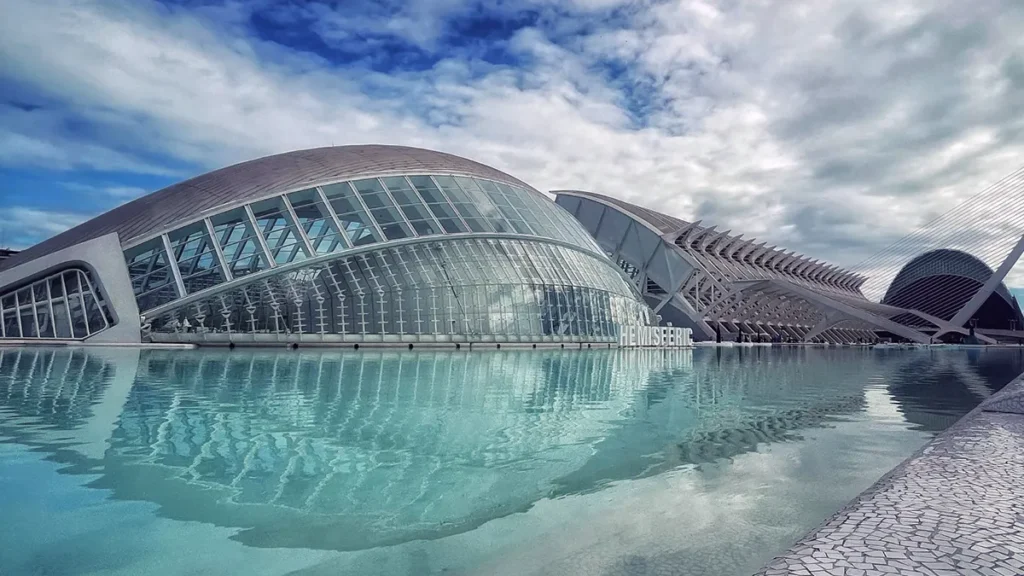
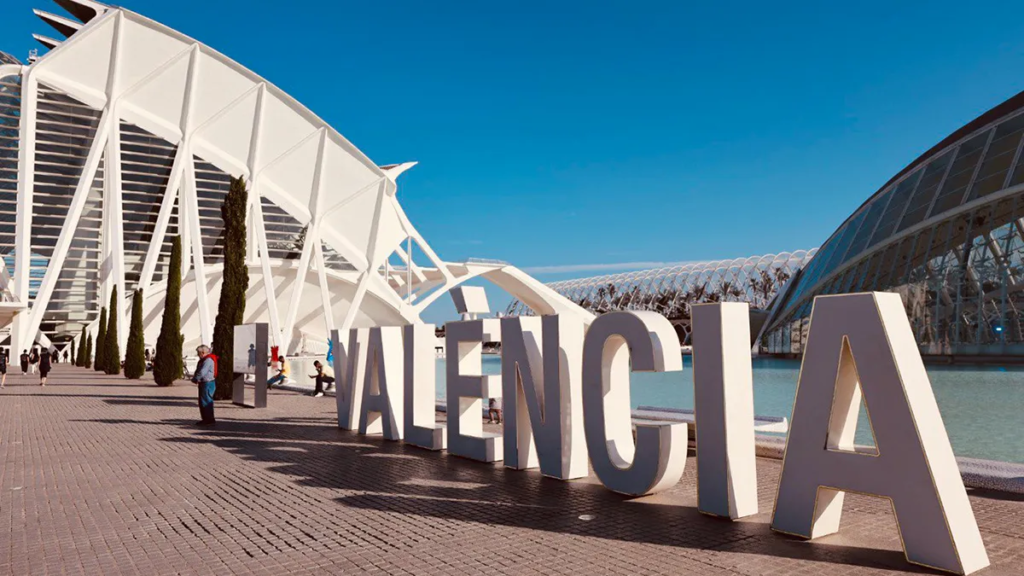
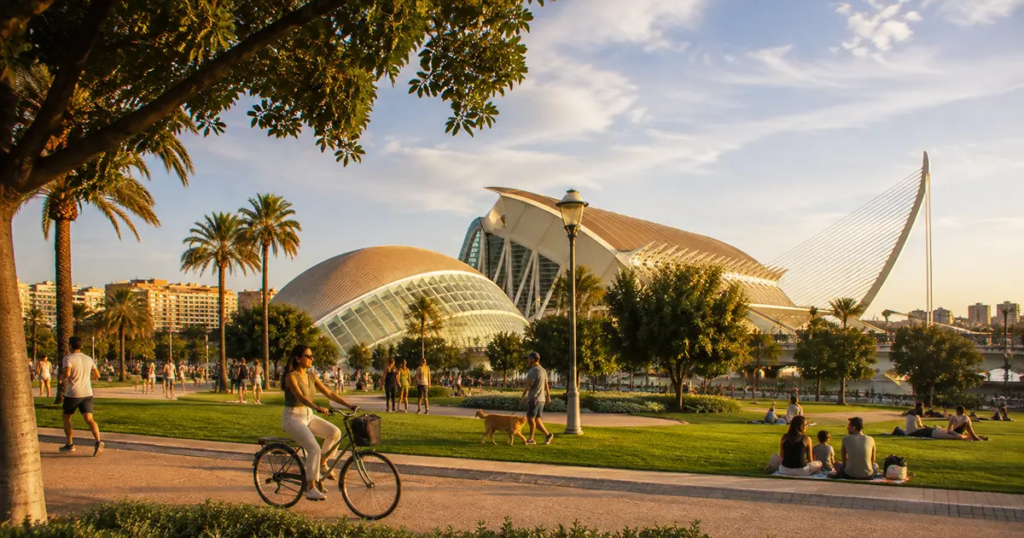
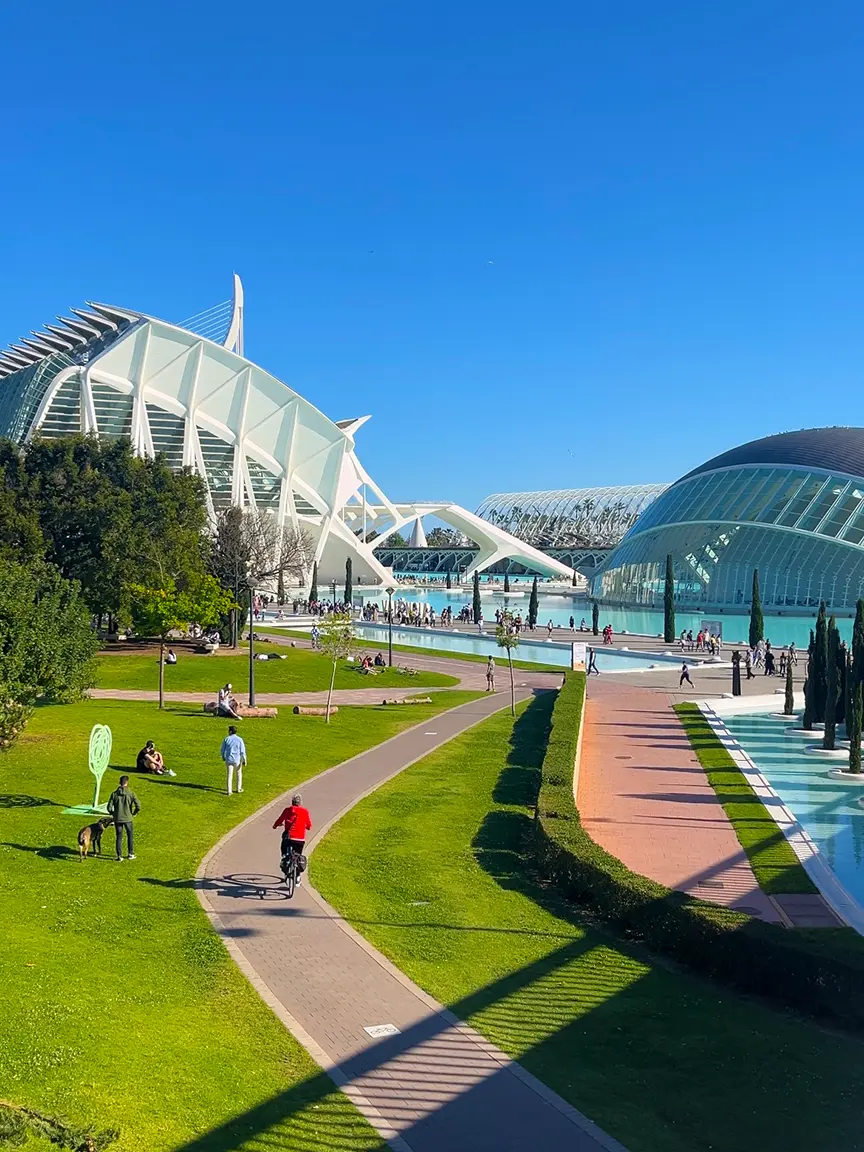
Towards the eastern side of Turia Gardens, the landscape changes dramatically as the greenery meets the white futuristic architecture of the City of Arts and Sciences.
Even if you aren’t planning to visit the museums or Oceanogràfic, it’s worth spending some time outside the complex. The open spaces, pools and architecture make this one of the most distinctive parts of Valencia.
For a bike ride, it also works well as either a starting point or a finishing point — and, as we’ll explain later, it’s the natural direction to continue if you want to ride towards the coast.
Gulliver Park
A little farther west is Gulliver Park, one of the most useful stops if you’re exploring Valencia with children.
The playground is built around a huge representation of Gulliver lying on the ground, with ramps, stairs and slides forming part of the figure. Entry is free.
If you’re cycling as a family, this is exactly the kind of place where there’s no reason to hurry. Park the bikes safely, let the children play and continue when everyone is ready.
Palau de la Música
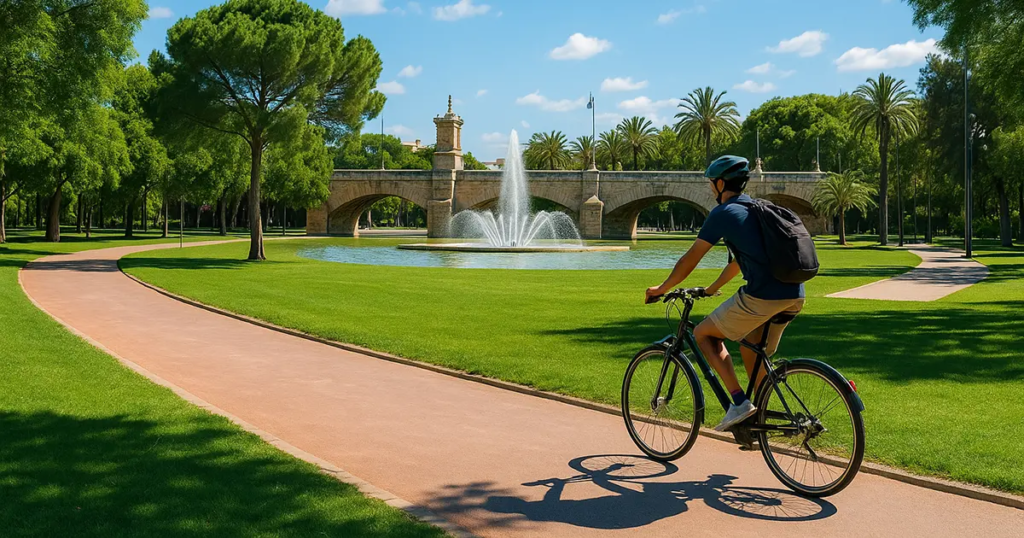
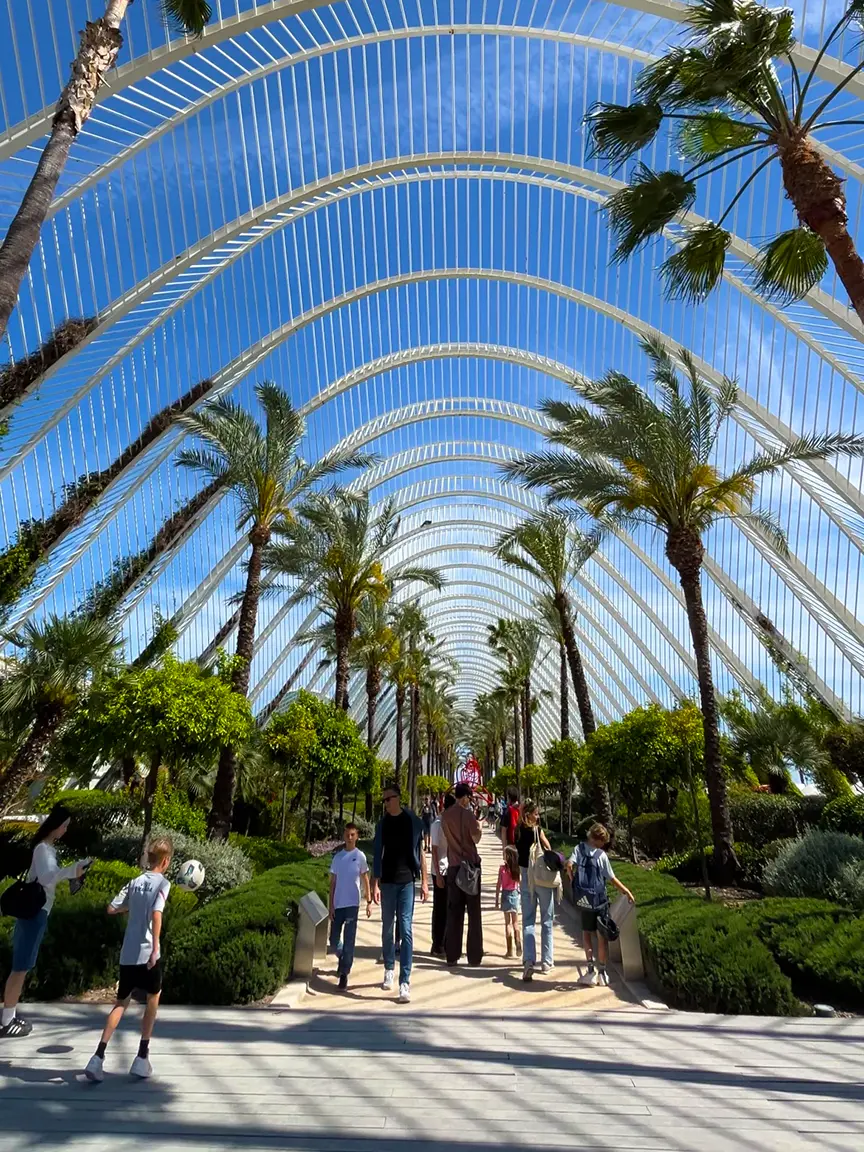
Around the Palau de la Música, Turia Gardens becomes more formal, with landscaped areas, water, palms, citrus trees and a large fountain and pond in front of the concert hall.
It’s a good place for a slower section of the ride or simply a break in the shade before continuing.
The Bridges of the Turia
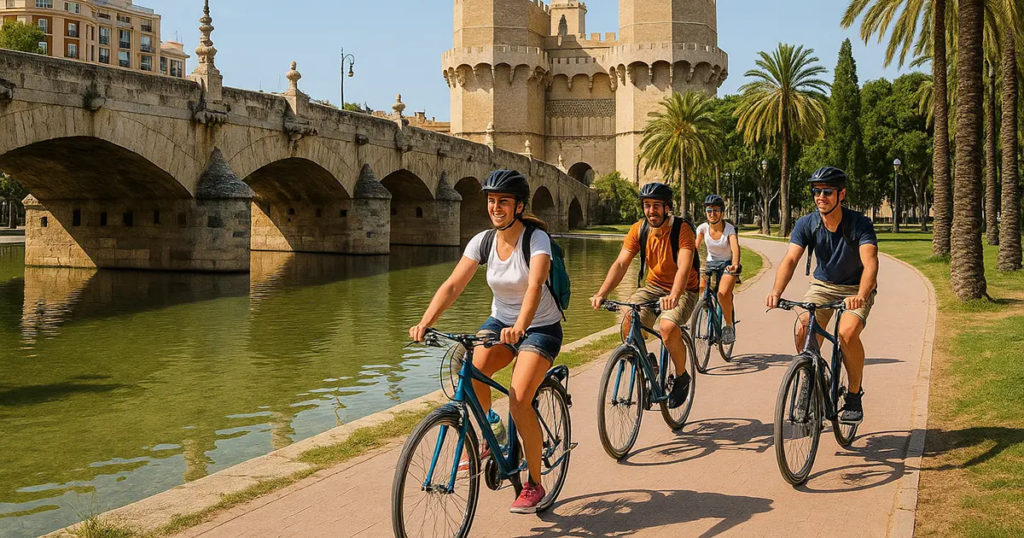
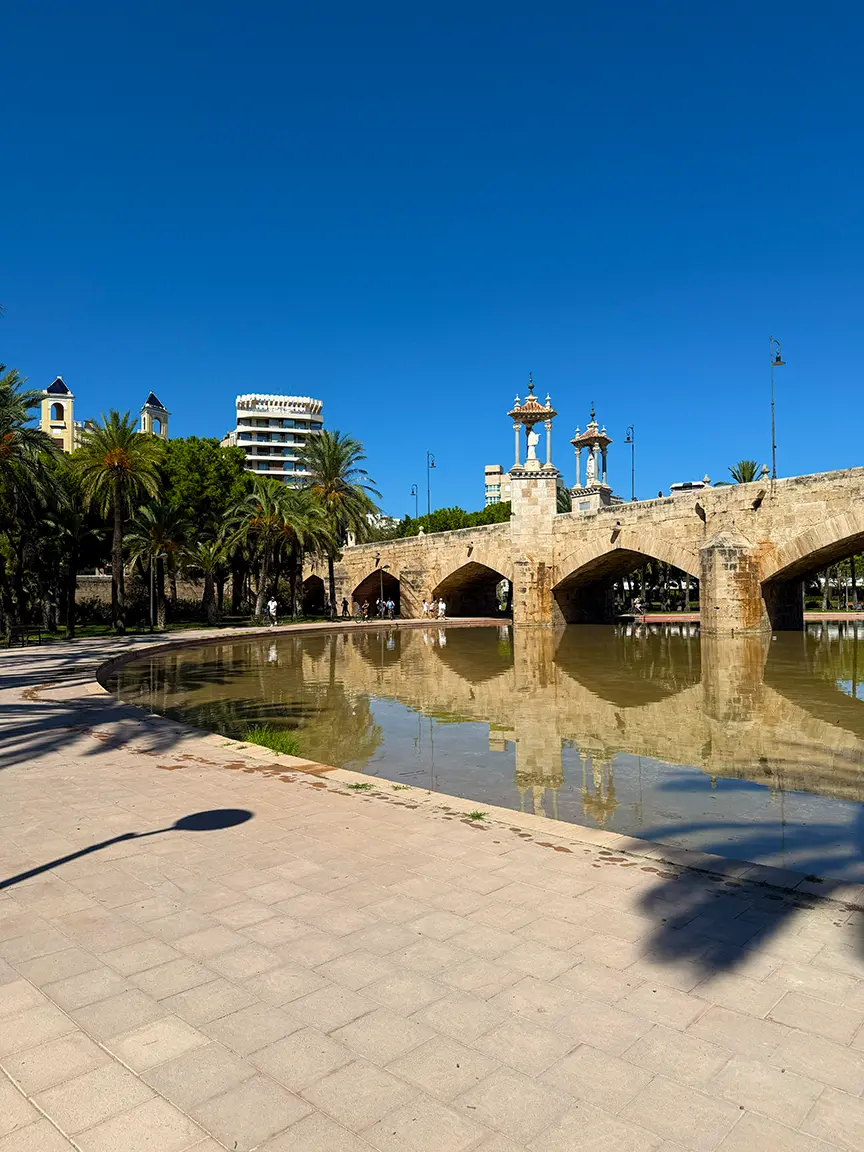
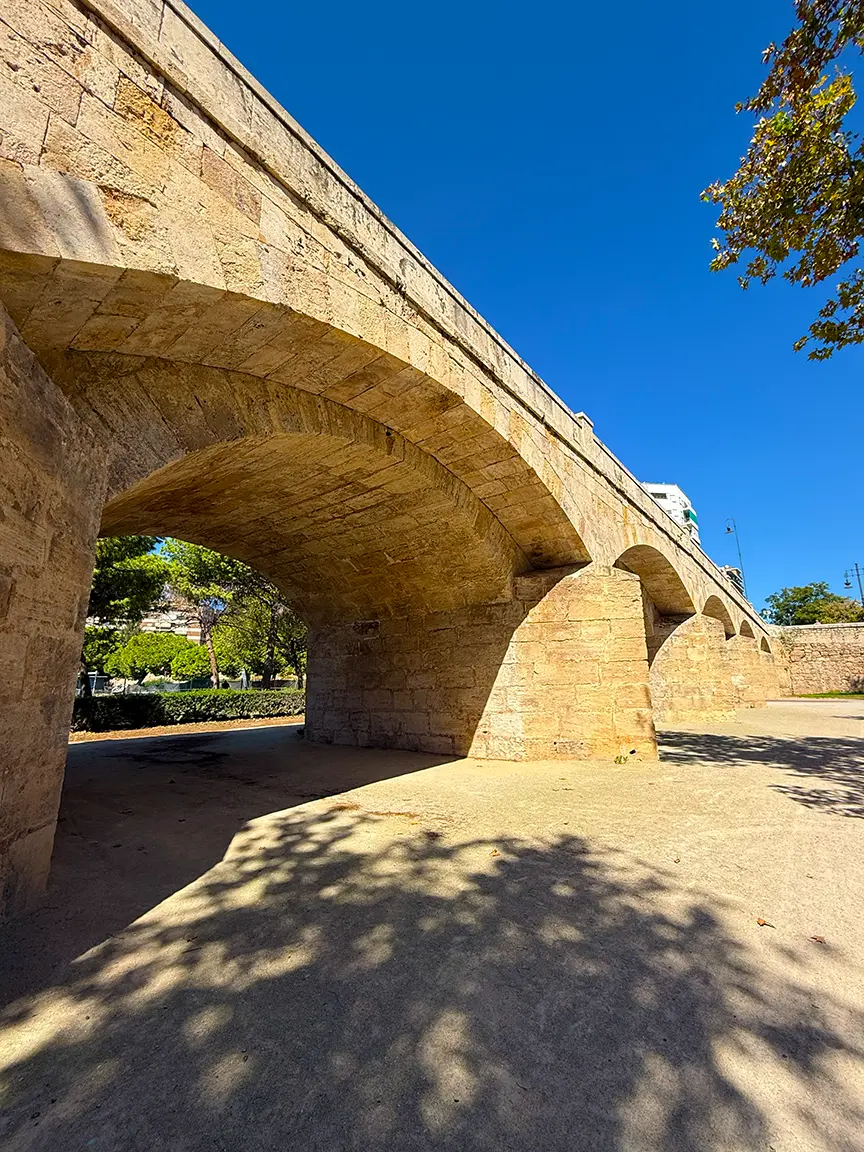
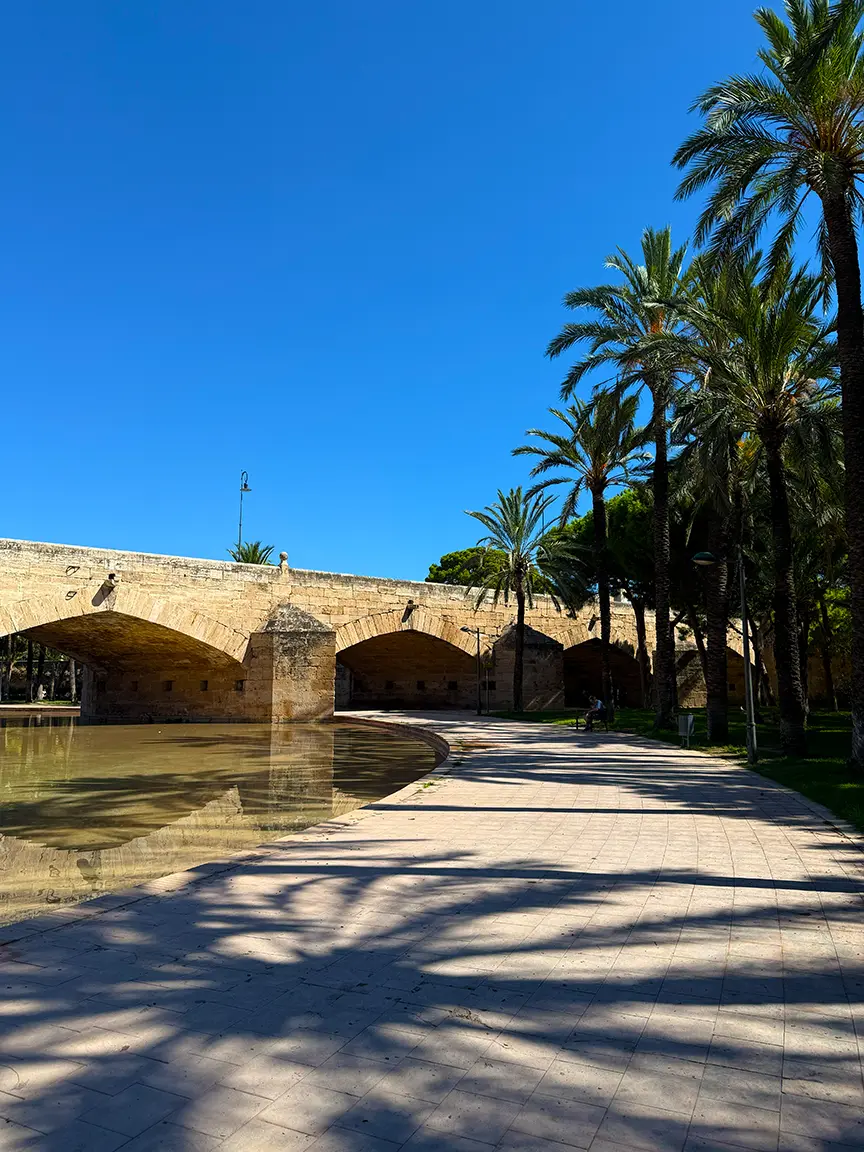
One of the pleasures of cycling through the old riverbed is passing beneath bridges from very different periods.
There are 18 along the gardens, including historic bridges such as Puente de la Trinidad, Puente de Serranos, Puente del Real and Puente del Mar, as well as much more recent structures.
You don’t need to stop at every bridge. What’s interesting is how they reveal the different layers of Valencia above you while the park continues below.
Torres de Serranos and the Historic Centre
Torres de Serranos isn’t inside Turia Gardens itself, but the former city gate sits immediately beside the old riverbed.
That makes this area a useful point to leave the park briefly if you want to see the towers or continue into El Carmen and Valencia’s historic centre.
If your priority is cycling, you can simply continue through the gardens. If you’re combining cycling and sightseeing, this is one of the easiest places to make a short detour.
Parque de Cabecera
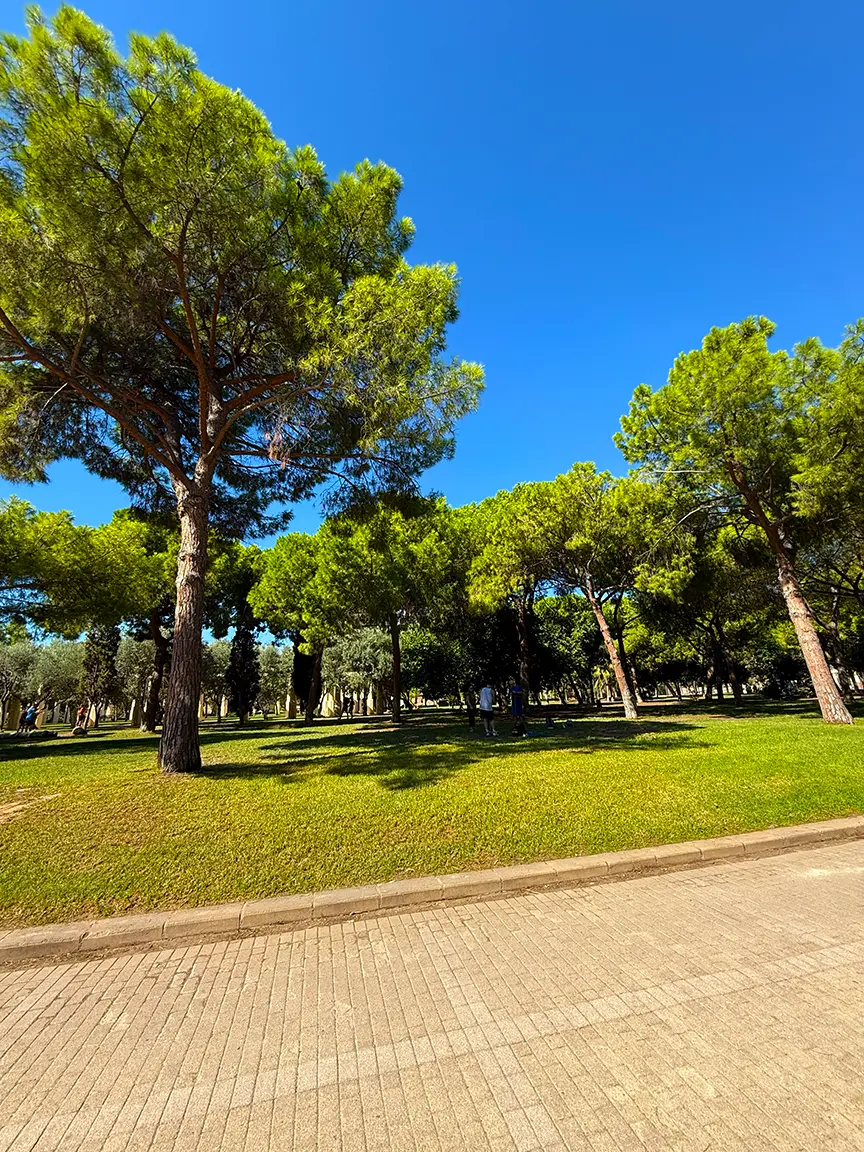
At the western end, the landscape opens into Parque de Cabecera, with a lake, paths, children’s play areas and greener spaces that feel quite different from the central sections of Turia.
Two main routes run around opposite sides of the lake, and the park also has a viewpoint hill and a boat area. Cyclists should remember that pedestrians have priority here.
This is a natural destination if you want to ride most of Turia Gardens in one direction — and it’s also where you can combine your cycling day with Bioparc Valencia.
Exploring Turia Gardens by Bike
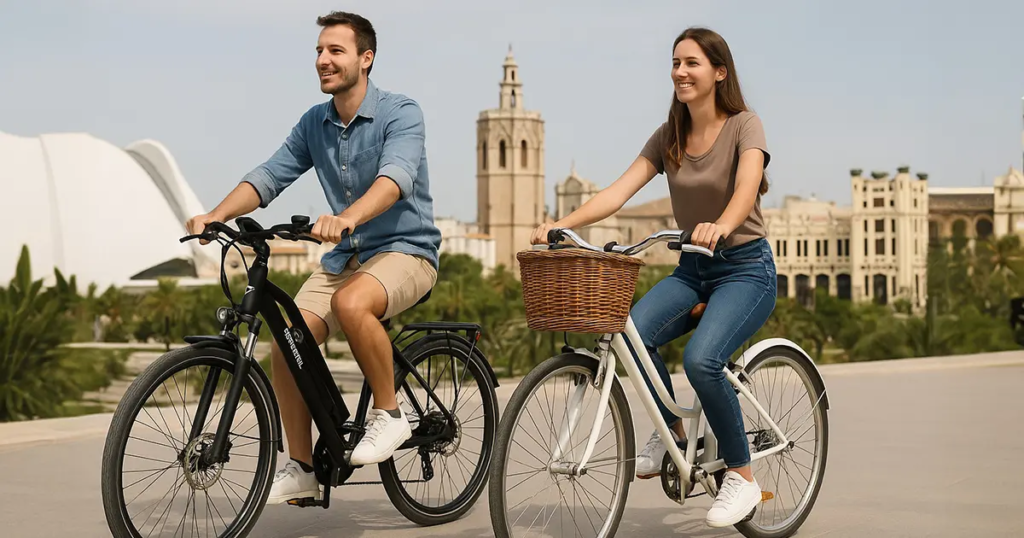
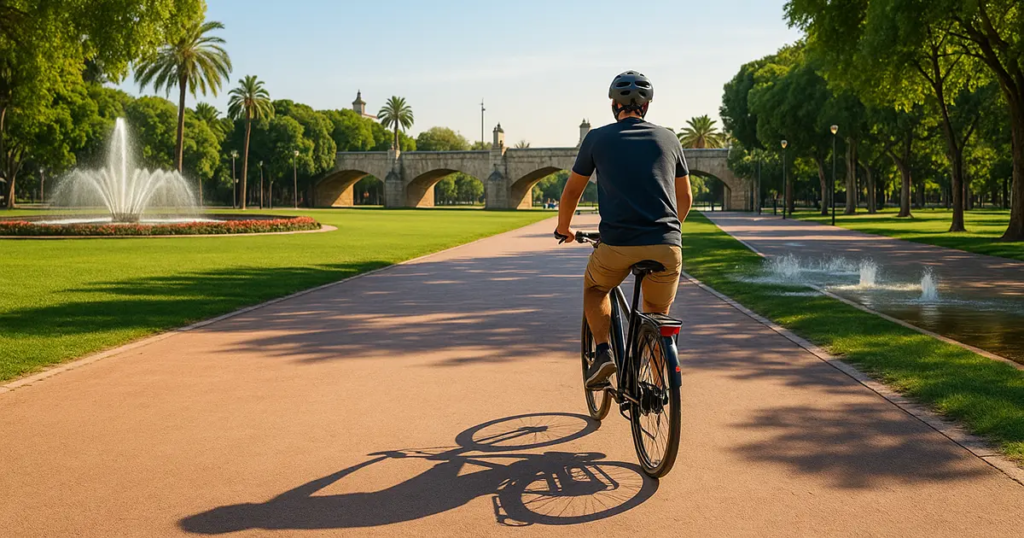
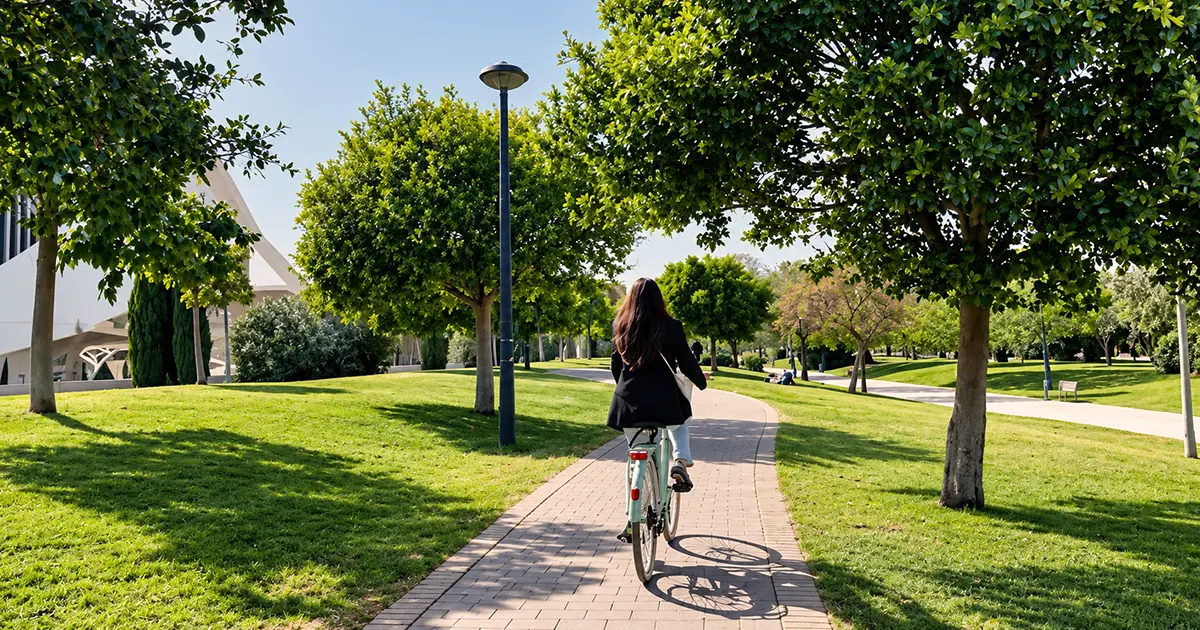
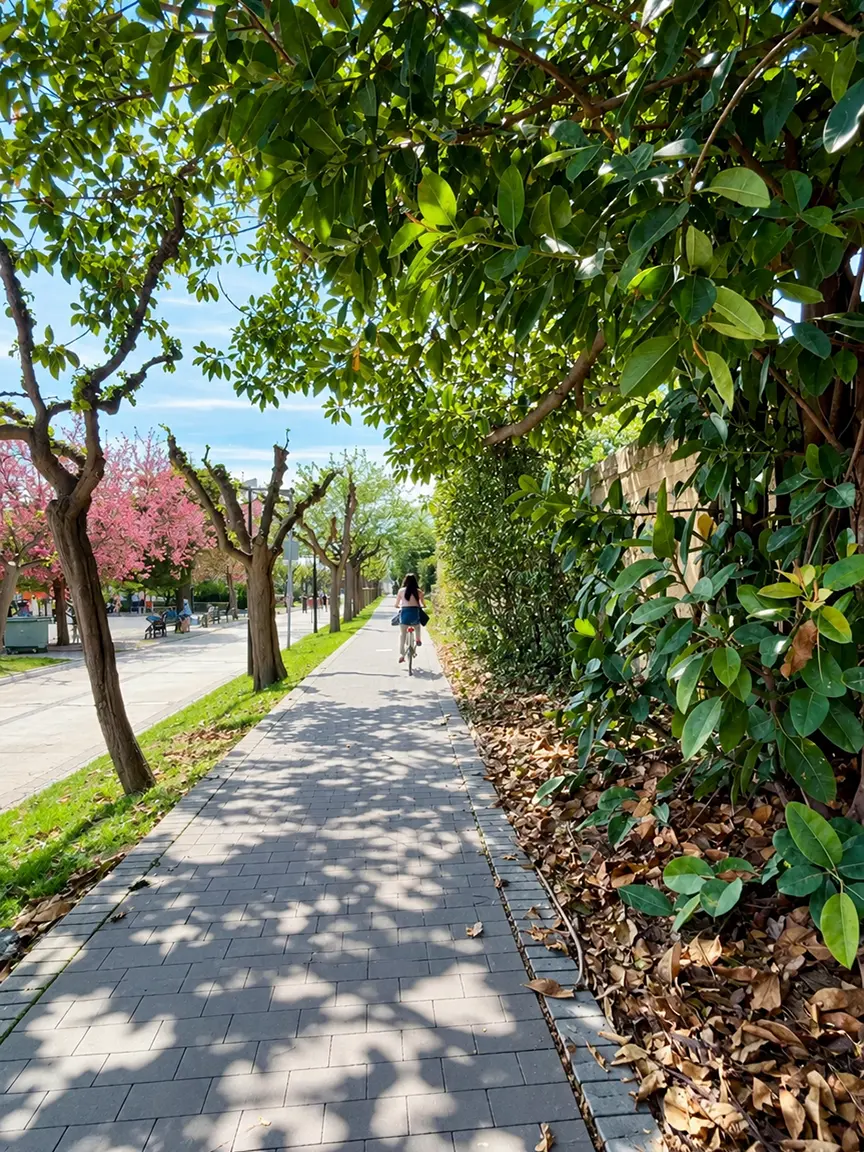
Turia Gardens is particularly convenient by bike because of its shape. Walking even a large part of a nine-kilometre park takes time; cycling lets you see several different sections without turning the day into a long walk.
Valencia is also predominantly flat, and Jardín del Turia is well suited to cycling.
That doesn’t mean you should think of the ride as a race from one end to the other.
For us, the better approach is to decide how much time you have and build the ride around that. A short visit might cover only a few sections around the City of Arts and Sciences, Gulliver and Palau de la Música. With half a day, you can travel much farther. Stop several times and perhaps continue all the way to Parque de Cabecera.
And remember the return journey. A route that feels easy in one direction becomes a much longer cycling day if you plan to ride the same distance back.
Regular Bike or E-Bike?
Both work well in Turia Gardens.
If you’re comfortable cycling and want a shorter or more active ride, a regular city bike is a good choice. The terrain itself isn’t particularly demanding.
An e-bike, however, can make much more sense than the flat landscape initially suggests.
If you want to cover a large part of the park and ride back again, the total distance quickly adds up. The same applies if you plan to continue towards the beach or farther along the coast.
An e-bike can also be useful if you don’t cycle regularly, if people in your group have different fitness levels, or if you simply want the bike to be transport rather than exercise.
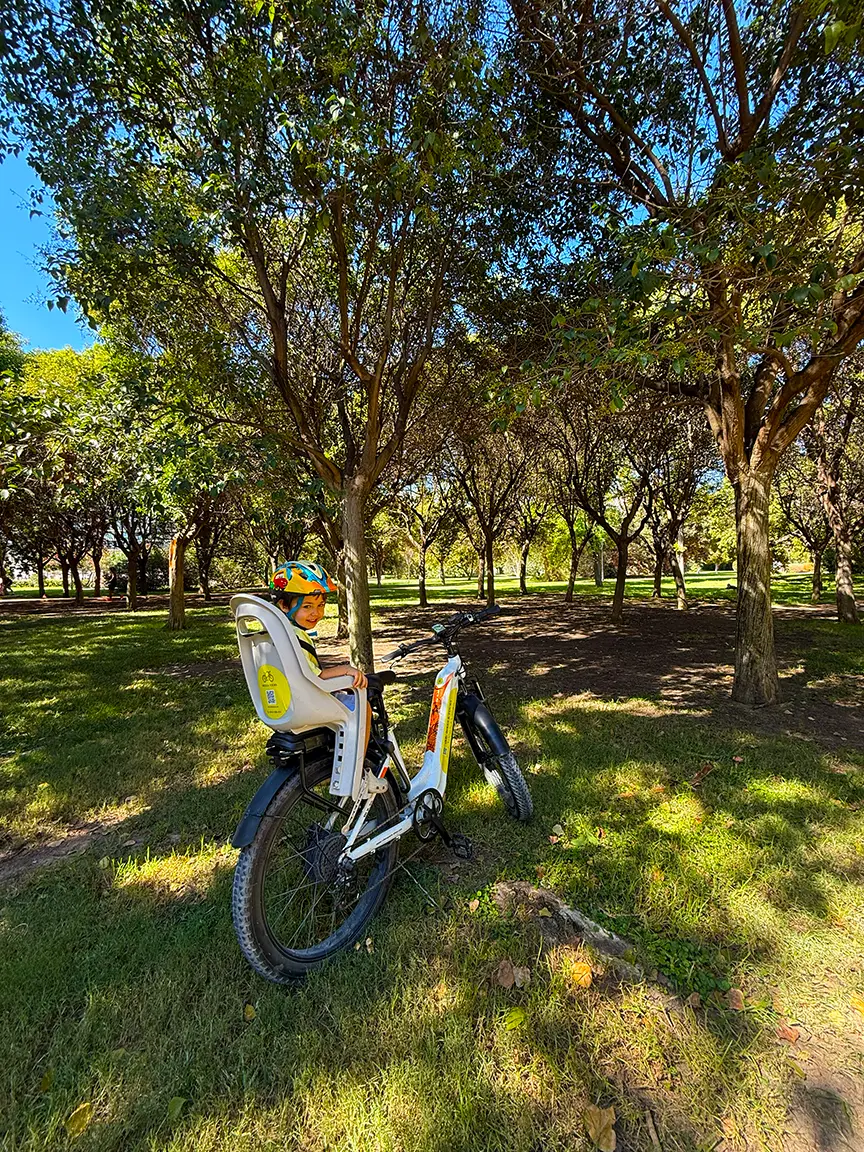
For families, there’s another consideration: carrying a child in a bike seat makes a longer ride more demanding for the adult. In that situation, an e-bike can make the day noticeably easier.
So we wouldn’t say that you need an e-bike for Turia Gardens, or that a regular bike is always the better option.
A simple way to choose is:
- Regular Bike — for a shorter or more active ride.
- E-Bike — if you want to cover more distance and keep the day relaxed.
Ready to explore Turia Gardens on your own? Rent a bike in Valencia and choose between a regular city bike and an e-bike for your ride.
A Half-Day Bike Route Through Turia Gardens
If you want to make Turia Gardens the main activity rather than simply cycling through it, one easy plan is to start around the City of Arts and Sciences and ride west towards Parque de Cabecera.
Think of this as a direction rather than a strict itinerary:
City of Arts and Sciences → Gulliver Park → Palau de la Música → historic bridges / Serranos area → Parque de Cabecera
There’s no reason to complete every part.
You might spend twenty minutes at Gulliver Park or much longer if you’re travelling with children. You can stop around Palau de la Música, leave the bike for a short walk, take a break beneath the trees or find a green area for a picnic.
Around Serranos, you can stay in the former riverbed or make a short detour towards Torres de Serranos and the historic centre.
Continue west and eventually you reach Parque de Cabecera. From there, you can explore the paths around the lake, take a longer break or simply turn around when you feel you’ve ridden enough.
That last point matters: you don’t have to complete the entire park.
If you’re travelling with children, there’s even less reason to focus on covering the whole park. A shorter ride with time at Gulliver Park, a picnic and plenty of breaks can work much better. If you want a longer family day, continue towards Parque de Cabecera and combine the ride with Bioparc Valencia.
A picnic also works particularly well with this kind of ride. Instead of scheduling lunch at a particular time, stop when you find a part of the gardens where you want to stay for a while.
Add Bioparc Valencia
If you reach the western end and want to turn the ride into a longer day, Bioparc Valencia is right beside Parque de Cabecera.
Bioparc recommends access through the old Turia riverbed, and bicycle parking is available at the entrance. Bicycles aren’t allowed inside the zoo, so you need to park them before visiting.
That creates a simple combination:
cycle through Turia → Parque de Cabecera → park the bikes → visit Bioparc → ride back later.
Just bear in mind that Bioparc is a substantial visit in itself. If you plan to spend several hours there, treat this as a full-day combination rather than trying to squeeze everything into a short bike ride.
Want to Ride Further? Continue to the Coast
Turia Gardens Valencia doesn’t have to be the end of the ride.
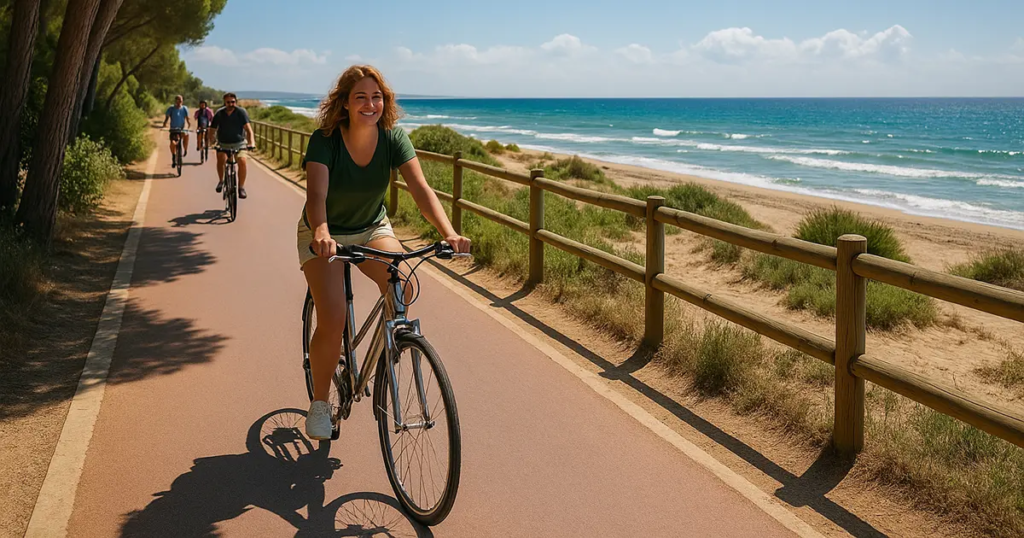
If you travel in the opposite direction towards the City of Arts and Sciences, you can continue from there towards Valencia’s maritime side and the Mediterranean.
How far you go is entirely up to you.
You can stop around Valencia Marina, continue towards Malvarrosa, ride farther along the coast to Patacona. Otherwise, you can make it a substantially longer cycling day and continue north to Port Saplaya.
The same route can therefore turn into three very different rides:
- Option 1: Turia Gardens only — spend your time exploring the park.
- Option 2: Turia + beach — continue to the Mediterranean and stop when you’ve had enough.
- Option 3: Turia + longer coastal ride — follow the coast beyond Valencia towards Port Saplaya.
If the last option interests you, read our Port Saplaya Valencia: What to See, Beach & How to Visit guide before planning the ride.
This is also where an e-bike becomes increasingly useful. The park itself is flat, but once you combine Turia with a return coastal journey, total distance matters much more than elevation.
Explore Turia Gardens Valencia with a Local Guide
If it’s your first time in Valencia and you’d rather combine Turia Gardens with some of the city’s other main sights, another option is to explore it as part of a guided bike tour.
Our Valencia Bike Tour: Top 25 Highlights combines sections of Turia Gardens with Valencia’s historic centre, the City of Arts and Sciences and other important parts of the city.
Along the way, the guide shares local facts and practical information about the places you pass, while the bicycle makes it possible to connect areas that would take much longer to cover on foot.
If you prefer exploring independently but want more ideas beyond Turia, our Top 10 Bike Routes in Valencia covers several different ways to discover the city and its surroundings by bike.
Practical Tips for Cycling in Turia Gardens
Don’t underestimate the distance. More than nine kilometres through the park is manageable for many people. But riding a large part of it and then returning can turn into a substantial outing.
Give pedestrians priority. Turia is shared public space rather than one continuous bicycle-only track. Be particularly careful in busy pedestrian areas and around Parque de Cabecera.
Slow down around busy areas. Gulliver Park, playgrounds and popular pedestrian sections are places to enjoy rather than rush through.
Carry water, especially in warmer months. Valencia’s summer heat can make even a flat ride considerably more tiring.
Lock your bike during longer stops. This is particularly important if you leave it to visit an attraction, have lunch or spend time away from the bike.
Plan the return before deciding how far to go. If you’re already tired when you reach your furthest point, the same distance still has to be covered in the other direction — unless you’ve planned another way back.
FAQ
Yes. It’s one of the easiest places to combine green space, cycling, architecture and different parts of Valencia while spending much of your time away from normal city traffic.
The main Jardín del Turia extends for more than nine kilometres, from the Parque de Cabecera area towards the City of Arts and Sciences.
Yes. Access to Jardín del Turia is free. Individual attractions in and around the park may have their own admission fees.
Yes. Cycling is one of the most practical ways to explore the former riverbed. It’s shared public space, so pay attention to pedestrians and slow down in busy areas.
Around two hours works for a shorter visit. For a relaxed bike ride with several stops or a picnic, allow half a day. Adding Bioparc or a longer coastal ride can turn it into a full-day plan.
Yes. Gulliver Park, playgrounds and large green areas make it particularly suitable for families, and cycling lets you adapt the distance to your children.
Yes. Bioparc is beside Parque de Cabecera at the western end of the route. Bicycle parking is available outside, but bikes cannot be taken inside.
Yes. From the City of Arts and Sciences side, you can continue towards the coast and stop around Valencia Marina, Malvarrosa or Patacona, or ride farther towards Port Saplaya.
Not necessarily. A regular bike works well for shorter rides and people comfortable with cycling. An e-bike can be more comfortable for longer out-and-back rides, family trips or extensions towards the coast.